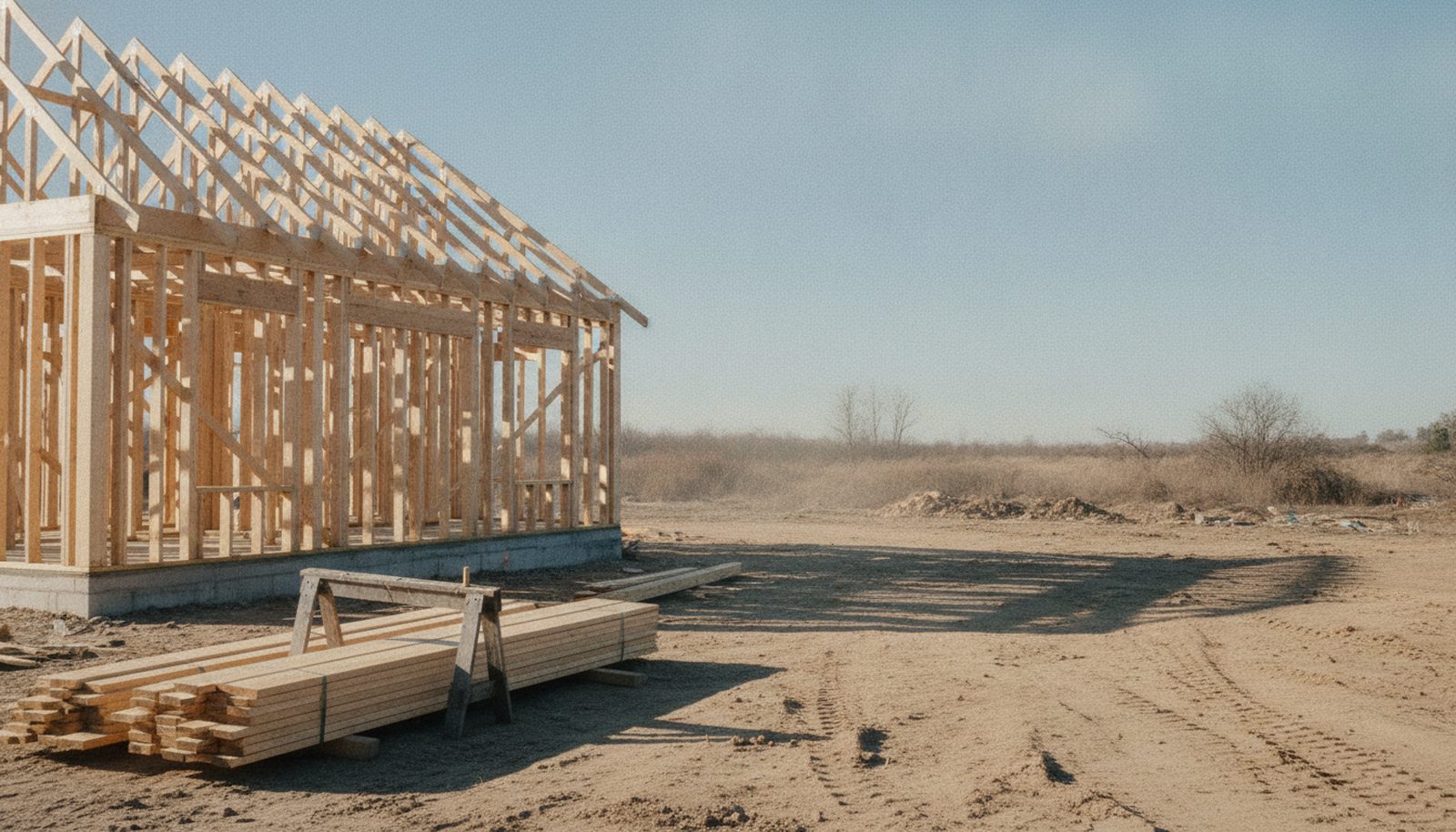
Cost to Build a House Calculator
| Site work | $21,482 |
| Foundation | $33,757 |
| Framing | $52,170 |
| Exterior finishes | $42,963 |
| Major systems | $52,170 |
| Interior finishes | $73,651 |
| Final steps | $18,413 |
| Other and contingency | $12,275 |
Construction rates are 2026 national figures per finished square foot — standard $150, above-average $190, custom $250, luxury $340 — scaled by a state cost index (RSMeans-based, national = 120). They include the builder’s overhead and profit but not the land. Site work covers clearing, utility connections and the driveway and varies enormously; permits and design run 3–10%. Add 15–20% for a cost-plus custom build with changes along the way.
Enter the finished square feet, your state and the finish level, add a garage, basement and site work, and get the total cost to build, the cost per square foot, where the money goes, and how it compares with buying the median home in your state.
The calculator prices the house itself from a per-square-foot rate for your finish level, scaled by a state construction-cost index, then adds the pieces that are not “living area” — garage, basement, site work, permits and design — because that is where most “$150 a square foot” estimates go wrong. The result is the cost to build on a lot you already own; add the land. The build-vs-buy line compares it with the median existing home in your state, which is the honest test of whether building makes financial sense. For the cost of rebuilding an existing house after a loss (insurance replacement cost, which runs higher), use the rebuild cost calculator instead.
How much does it cost to build a house?
In 2026 a standard-finish house costs about $150 per square foot of living area to build nationally, so a 2,000 sq ft house is $300,000 for the house itself and about $370,240 with a two-car garage, permits and $25,000 of site work — before the land. A 1,500 sq ft house runs about $291,490 all-in. In Texas the same 2,000 sq ft house is $347,224; in California $600,400. Upgraded finishes push the rate to $190, custom homes to $250 and luxury builds to $340 or more per square foot.
For comparison, the National Association of Home Builders’ 2024 construction cost survey put the average builder’s construction cost at about $162 per square foot for a 2,647 sq ft house ($428,000), with the finished lot adding roughly $90,000 on top and the sale price averaging $665,000 once financing, overhead, marketing and profit were included. Our $150 standard rate is the construction cost for a simpler house; the all-in figure from the tool is what you would pay a builder on your own lot.
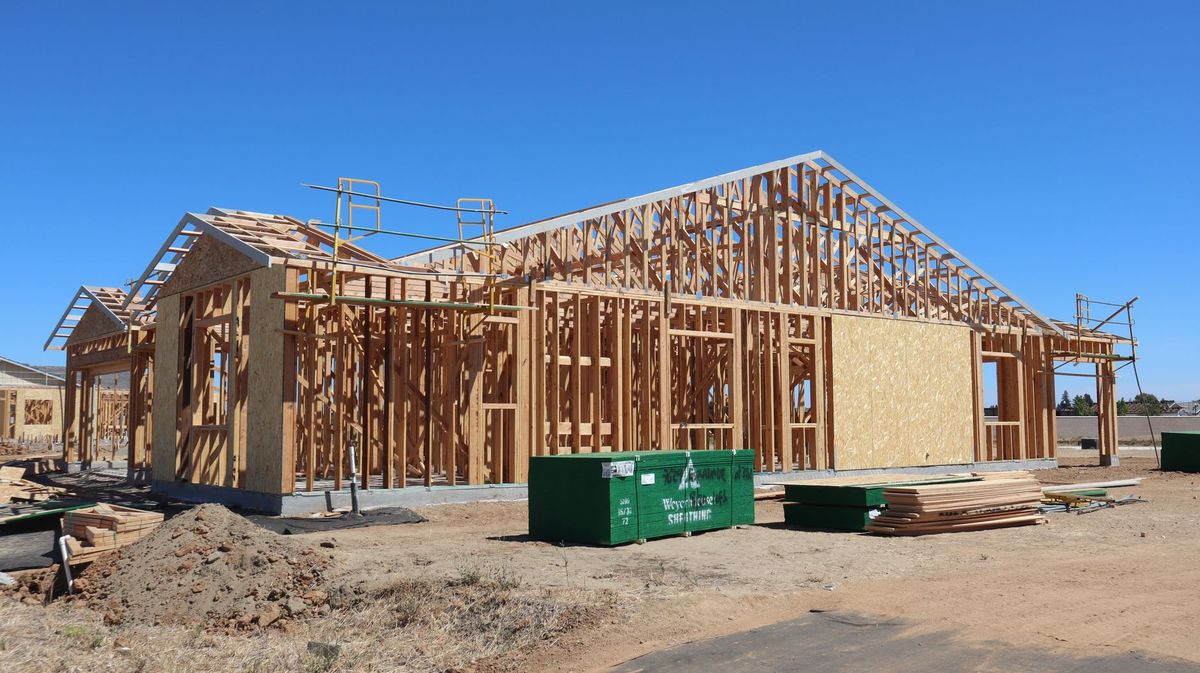
Cost to build a house by size
Cost does not scale in a straight line with square feet. Kitchens, bathrooms, the mechanical systems and the site cost roughly the same whether the house is 1,500 or 2,500 sq ft, so the all-in cost per square foot falls as the house grows: about $204 at 1,200 sq ft, $185 at 2,000 and $176 at 3,000 in the table below. The cheapest square feet in any house are plain bedroom and living space; the dearest are kitchens ($300–600 per sq ft of kitchen) and bathrooms. A second story is about 5% cheaper per square foot than the same area on one level because the foundation and roof are half the size.
| Living area | House only (standard, $150/sq ft) | All-in, standard | All-in per sq ft | All-in, above average | All-in, custom |
|---|---|---|---|---|---|
| 1,000 sq ft | $150,000 | $212,740 | $213 | $254,740 | $317,740 |
| 1,200 sq ft | $180,000 | $244,240 | $204 | $294,640 | $370,240 |
| 1,500 sq ft | $225,000 | $291,490 | $194 | $354,490 | $448,990 |
| 1,800 sq ft | $270,000 | $338,740 | $188 | $414,340 | $527,740 |
| 2,000 sq ft | $300,000 | $370,240 | $185 | $454,240 | $580,240 |
| 2,200 sq ft | $330,000 | $401,740 | $183 | $494,140 | $632,740 |
| 2,500 sq ft | $375,000 | $448,990 | $180 | $553,990 | $711,490 |
| 3,000 sq ft | $450,000 | $527,740 | $176 | $653,740 | $842,740 |
| 3,500 sq ft | $525,000 | $606,490 | $173 | $753,490 | $973,990 |
| 4,000 sq ft | $600,000 | $685,240 | $171 | $853,240 | $1,105,240 |
Calculator output at the national index (120). Land not included. Add $30,000–75,000 for an unfinished basement under a 1,000–2,500 sq ft footprint, or about 2.5× that finished.
Worked example: 1,500 sq ft in Texas
Texas’s index is 112 against the national 120, so the standard rate is $150 × 0.933 = $140 per sq ft. House: 1,500 × $140 = $210,000. Two-car garage: 480 sq ft × $56 = $26,880. Permits and plans at 5%: $11,844. Site work: $25,000. Total $273,724, or $182 per sq ft all-in — against a Texas median existing home of $261,000. Add a $60,000–$120,000 lot in a Texas suburb and building costs more than buying the typical house; it wins only on a cheap rural lot or when you want something the resale market does not offer.
Cost to build a house per square foot by state
Labor rates, code requirements and material freight move construction cost by more than a factor of two across the country. The cheapest states to build in are Alabama ($111), Arkansas ($113), Mississippi ($113), Oklahoma ($131); the dearest are Hawaii ($329), California ($250), New York ($249), Massachusetts ($238) per square foot at standard finish. The last two columns compare a complete 2,000 sq ft standard build (garage, 5% soft costs, $25,000 site work, no land) with the state’s 2026 median existing-home value: a negative number means new construction undercuts the resale market before land, which is true on the West Coast, across the Mountain West (Arizona, Colorado, Idaho, Montana, Nevada, Utah, Wyoming) and in the dearest Northeast markets (Massachusetts, New Jersey, D.C.), and false almost everywhere in the South and Midwest, where cheap existing housing undercuts new construction by 30–40%.
| State | Standard | Above avg. | Custom | Luxury | 2,000 sq ft standard, all-in | Median home value 2026 | Build vs. median |
|---|---|---|---|---|---|---|---|
| Alabama | $111 | $141 | $185 | $252 | $281,053 | $201,000 | +40% |
| Alaska | $216 | $274 | $360 | $490 | $522,721 | $401,000 | +30% |
| Arizona | $151 | $192 | $252 | $343 | $373,117 | $385,000 | -3% |
| Arkansas | $113 | $143 | $188 | $255 | $283,930 | $211,500 | +34% |
| California | $250 | $317 | $417 | $567 | $600,400 | $688,000 | -13% |
| Colorado | $171 | $217 | $285 | $388 | $419,149 | $494,000 | -15% |
| Connecticut | $215 | $272 | $358 | $487 | $519,844 | $447,000 | +16% |
| Delaware | $198 | $250 | $329 | $448 | $479,566 | $377,500 | +27% |
| District of Columbia | $191 | $242 | $319 | $433 | $465,181 | $567,000 | -18% |
| Florida | $153 | $193 | $254 | $346 | $375,994 | $345,000 | +9% |
| Georgia | $138 | $174 | $229 | $312 | $341,470 | $257,000 | +33% |
| Hawaii | $329 | $416 | $548 | $745 | $781,651 | $842,000 | -7% |
| Idaho | $144 | $182 | $240 | $326 | $355,855 | $444,000 | -20% |
| Illinois | $189 | $239 | $315 | $428 | $459,427 | $197,000 | +133% |
| Indiana | $141 | $179 | $235 | $320 | $350,101 | $234,000 | +50% |
| Iowa | $145 | $184 | $242 | $329 | $358,732 | $207,500 | +73% |
| Kansas | $139 | $176 | $231 | $315 | $344,347 | $178,000 | +93% |
| Kentucky | $138 | $174 | $229 | $312 | $341,470 | $181,000 | +89% |
| Louisiana | $140 | $177 | $233 | $317 | $347,224 | $198,000 | +75% |
| Maine | $182 | $231 | $304 | $414 | $445,042 | $351,000 | +27% |
| Maryland | $191 | $242 | $319 | $433 | $465,181 | $441,000 | +5% |
| Massachusetts | $238 | $301 | $396 | $538 | $571,630 | $617,000 | -7% |
| Michigan | $156 | $198 | $260 | $354 | $384,625 | $244,000 | +58% |
| Minnesota | $168 | $212 | $279 | $380 | $410,518 | $297,000 | +38% |
| Mississippi | $113 | $143 | $188 | $255 | $283,930 | $153,000 | +86% |
| Missouri | $138 | $174 | $229 | $312 | $341,470 | $245,000 | +39% |
| Montana | $151 | $192 | $252 | $343 | $373,117 | $418,500 | -11% |
| Nebraska | $139 | $176 | $231 | $315 | $344,347 | $234,000 | +47% |
| Nevada | $168 | $212 | $279 | $380 | $410,518 | $411,000 | -0% |
| New Hampshire | $184 | $233 | $306 | $417 | $447,919 | $479,500 | -7% |
| New Jersey | $229 | $290 | $381 | $519 | $551,491 | $573,000 | -4% |
| New Mexico | $145 | $184 | $242 | $329 | $358,732 | $319,000 | +12% |
| New York | $249 | $315 | $415 | $564 | $597,523 | $333,000 | +79% |
| North Carolina | $141 | $179 | $235 | $320 | $350,101 | $287,000 | +22% |
| North Dakota | $144 | $182 | $240 | $326 | $355,855 | $237,000 | +50% |
| Ohio | $150 | $190 | $250 | $340 | $370,240 | $225,500 | +64% |
| Oklahoma | $131 | $166 | $219 | $298 | $327,085 | $188,000 | +74% |
| Oregon | $182 | $231 | $304 | $414 | $445,042 | $459,500 | -3% |
| Pennsylvania | $176 | $223 | $294 | $400 | $430,657 | $238,000 | +81% |
| Rhode Island | $219 | $277 | $365 | $496 | $528,475 | $523,500 | +1% |
| South Carolina | $140 | $177 | $233 | $317 | $347,224 | $236,000 | +47% |
| South Dakota | $141 | $179 | $235 | $320 | $350,101 | $298,000 | +17% |
| Tennessee | $136 | $173 | $227 | $309 | $338,593 | $267,000 | +27% |
| Texas | $140 | $177 | $233 | $317 | $347,224 | $261,000 | +33% |
| Utah | $151 | $192 | $252 | $343 | $373,117 | $479,000 | -22% |
| Vermont | $188 | $238 | $313 | $425 | $456,550 | $352,000 | +30% |
| Virginia | $160 | $203 | $267 | $363 | $393,256 | $336,500 | +17% |
| Washington | $218 | $276 | $363 | $493 | $525,598 | $501,000 | +5% |
| West Virginia | $145 | $184 | $242 | $329 | $358,732 | $150,000 | +139% |
| Wisconsin | $150 | $190 | $250 | $340 | $370,240 | $311,000 | +19% |
| Wyoming | $143 | $181 | $238 | $323 | $352,978 | $360,500 | -2% |
Rates = national tier rate × state index ÷ 120; the index is RSMeans-based (D.C. uses Maryland). All-in = house + 2-car garage + 5% soft costs + $25,000 site work, no land. Median home value: SmarterSquares 2026 state medians from ZIP-level data. Links go to each state’s home-value page; rebuild (replacement) rates per state are on the cost-to-rebuild pages.
Within a state the spread is as wide again: building in Austin or Houston costs 10–20% more than in rural Texas, and a mountain or island lot in Colorado or Hawaii can add 30% for access and freight. Use the state figure as the midpoint and the tool’s range (−15% / +20%) as the realistic band for a bid.
Where the money goes
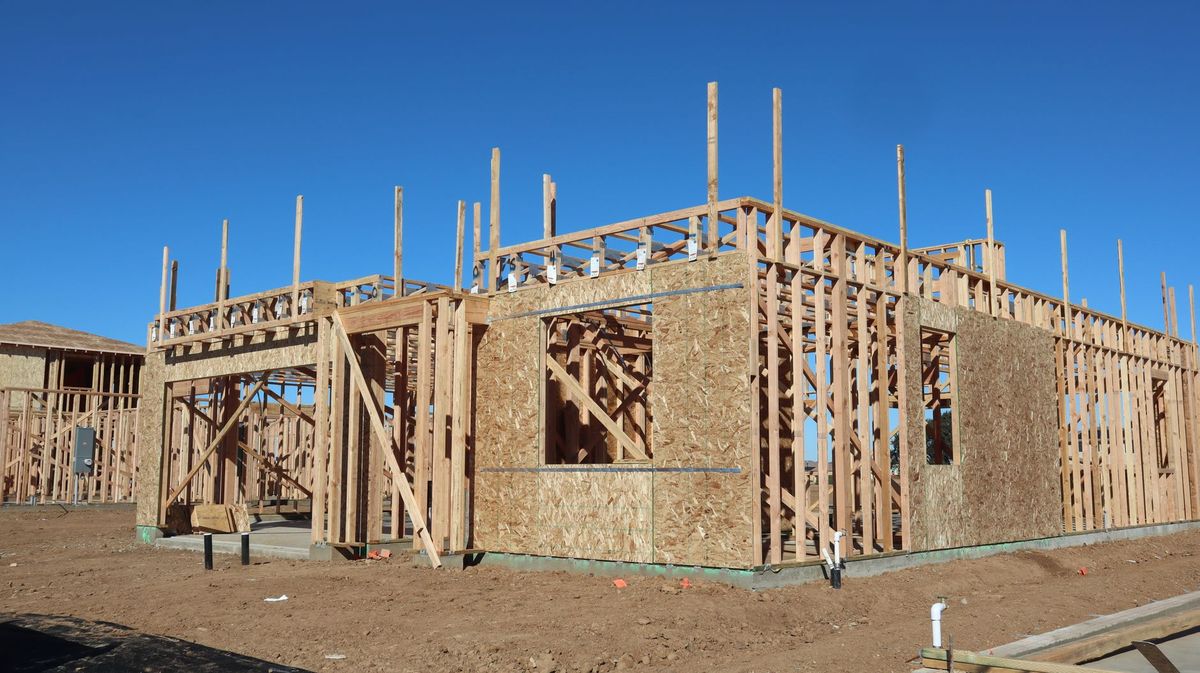
Builders report costs in eight stages, and the shares are remarkably stable from year to year. Interior finishes are the largest slice at about a quarter, framing and the major systems about 17% each, exterior finishes 14%, the foundation 11%, site work 7%. The table applies those shares to a $300,000 construction budget and to a 2,000 sq ft standard house at the national rate.
| Stage | Share | On a $300,000 build | On a 2,000 sq ft standard house ($300,000) |
|---|---|---|---|
| Site work (clearing, excavation, utilities to the house) | 7% | $21,000 | $21,000 |
| Foundation | 11% | $33,000 | $33,000 |
| Framing (incl. trusses, sheathing) | 17% | $51,000 | $51,000 |
| Exterior finishes (roofing, siding, windows, doors) | 14% | $42,000 | $42,000 |
| Major systems (plumbing, electrical, HVAC rough-in) | 17% | $51,000 | $51,000 |
| Interior finishes (drywall, cabinets, flooring, paint, fixtures) | 24% | $72,000 | $72,000 |
| Final steps (driveway, landscaping, cleanup) | 6% | $18,000 | $18,000 |
| Other and contingency | 4% | $12,000 | $12,000 |
Source: NAHB Cost of Constructing a Home, 2024 survey (shares rounded to the nearest percent and grouped; “other” includes contingency). Lot, financing, overhead and builder profit are outside this breakdown.
The practical use of the shares: they tell you what a change costs. Dropping from above-average to standard finishes touches the interior-finish and exterior-finish stages (38% of the budget) and saves roughly $40 per square foot; a cheaper roof line or a rectangular footprint saves in framing and foundation (28%); a slab instead of a crawl space saves 2–4% in foundation. Materials you can price yourself: the concrete slab calculator for the foundation, the roofing calculator, the flooring calculator and the drywall calculator. Materials are about half of construction cost; labor is the other half.
Garage, basement and the costs that are not “per square foot”
Garage. An attached garage is unfinished space on a slab, so it costs about $60 per square foot nationally: $17,000 for a one-car (280 sq ft), $29,000 for a two-car (480 sq ft) and $42,000 for a three-car (700 sq ft), scaled by the state index. Dimensions and what fits are on the garage size calculator.
Basement. An unfinished basement adds about $30 per square foot of footprint over a slab (deeper excavation, taller foundation walls, waterproofing) — $60,000 under a 2,000 sq ft one-story house, $30,000 under a two-story with a 1,000 sq ft footprint. Finishing it costs another $45–50 per square foot, which is still the cheapest finished space you can add to a house; the finished basement ROI calculator covers resale value.
Site work and utilities. The $25,000 default covers clearing, grading, a short driveway and connecting to municipal water, sewer and power at the street. A rural lot with a well ($8,000–$15,000), a septic system ($10,000–$25,000), a long driveway and a power-line extension ($10–$25 per foot) can run $60,000–$100,000. Permits, plans and fees. Stock plans cost $1,000–$3,000 and an architect 8–15% of construction; permits and impact fees range from under $2,000 in rural counties to $30,000+ in parts of California and the Mountain West. The slider’s 5% default fits a stock plan in a typical suburb.
Build vs. buy: when building makes sense
Nationally the median existing home sold for about $418,000 in September 2026 (NAR), and the median existing home in ZIP-level data is around $289,000. A 2,000 sq ft standard build costs $370,240 before land. Whether building wins depends almost entirely on the lot:
- You already own the lot (inherited, a tear-down, a rural parcel): building a standard house usually costs the same as or less than buying an equivalent new house, and you get the layout you want. The tool’s build-vs-median line applies directly.
- You must buy the lot: add $50,000–$150,000 in most suburbs and $300,000+ in coastal metros. Then compare with the median home value in the city you are targeting, and remember that a new house carries lower maintenance for ten years and higher property taxes from day one (assessed at full value).
- Financing: a construction loan runs 0.5–1 percentage point above a 30-year mortgage, is interest-only during the 9–14 months of the build, and needs 20–25% down on land plus construction; it converts to a permanent mortgage at completion. Budget interest of roughly 3–4% of the construction cost over the build.
- Timeline: 7–9 months for a production builder, 10–14 months for a custom house, plus 2–4 months of design and permitting before ground breaks.

How to cut the cost of building a house
- Simplify the shape. A rectangle with a simple gable roof costs 10–15% less per square foot than the same area with bump-outs, dormers and multiple roof lines — framing, foundation and roofing all shrink.
- Go up, not out. Two stories save about 5% per square foot and a lot of site work.
- Standard finishes in the bedrooms, money in the kitchen. Finish level is 38% of the budget; buyers and appraisers reward kitchens and primary baths, not bedroom trim.
- Stock plans instead of a full architectural commission save 5–10% of construction.
- Bid the project to three builders with the same plans and allowance schedule; bids on identical plans routinely differ by 15–20%.
- Fix the allowances for cabinets, appliances, tile, lighting and plumbing fixtures in writing — allowance overruns are where most “the house cost $60,000 more than the quote” stories come from.
- Skip the basement in a dry, warm climate; a slab is $30 per square foot cheaper and in Texas, Florida and Arizona nobody expects one.
- Act as your own general contractor only if you have done it before. It saves the 15–25% builder markup and costs most first-timers more than that in delays and rework.
Compare the finished number against the price of an existing house of the same size on the price per square foot page, and against the cost of renovating one with the renovation cost tool.
How this cost to build a house calculator works and where the numbers come from
House cost = finished sq ft × tier rate (standard $150, above-average $190, custom $250, luxury $340 per sq ft, 2026 national) × state index ÷ 120, less 5% per sq ft for a two-story. Garage = 280/480/700 sq ft × $60 × index. Basement = footprint × $30 (unfinished) or $75 (finished) × index. Soft costs = your percentage of construction; site work is your dollar input. Total excludes land, financing and furnishings. The stage breakdown applies NAHB 2024 survey shares to the construction subtotal. Build-vs-buy compares the total with the state’s 2026 median existing-home value from SmarterSquares ZIP data. The likely range is −15% / +20%.
- NAHB, Cost of Constructing a Home (2024 survey: construction cost, lot, and sale-price shares)
- Census Bureau / HUD, Characteristics of New Housing (size, stories, garages, foundations of new single-family homes)
- State construction cost index (RSMeans-based, as used on the SmarterSquares rebuild pages)
- SmarterSquares home values by state (2026 medians)
Last reviewed November 6, 2026. Estimates only — verify local figures before you commit money.
Cost to Build a House Calculator: FAQ
How much does it cost to build a 1,500 sq ft house? +
About $225,000 for the house at the 2026 national standard rate of $150 per square foot, and roughly $291,490 all-in with a two-car garage, permits and $25,000 of site work, before land. In Texas the all-in figure is about $273,724; in California about $469,150.
How much does it cost to build a 2,000 sq ft house? +
About $300,000 for a standard-finish house and $370,240 all-in with a garage, permits and site work at U.S. average rates; $347,224 in Texas and $600,400 in California. Custom finishes raise the house itself to about $500,000.
What is the cost to build a house per square foot in 2026? +
$150 per square foot of living area for standard builder-grade finishes nationally, $190 for upgraded finishes, $250 for a custom home and $340+ for luxury construction, scaled by state from about $111 in Alabama to $329 in Hawaii at standard finish. All-in cost per square foot, with garage, permits and site work, runs $30–60 higher.
Is it cheaper to build or buy a house? +
Buying is usually cheaper once you include the land: a 2,000 sq ft standard build is about $370,240 before the lot, against a median existing home near $289,000 in ZIP-level data. Building wins when you already own the lot, when local resale prices are high relative to construction costs (the Northeast and West Coast), or when you want a layout the market does not offer.
What is the cheapest state to build a house in? +
Alabama, at about $111 per square foot for standard finishes, followed by Arkansas and Mississippi. Hawaii ($329), California and New York are the most expensive.
How much does a basement add to the cost of building? +
About $30 per square foot of footprint for an unfinished basement — $60,000 under a 2,000 sq ft single-story house — and about $75 per square foot finished. It is still the cheapest finished space a house can have, since the foundation walls and slab are needed anyway.
How long does it take to build a house? +
Seven to nine months for a production builder and 10 to 14 months for a custom home, after two to four months of design and permitting. Weather, inspections and allowance decisions are the usual delays; a construction loan is interest-only for the duration, so each extra month costs roughly 0.5% of the construction cost.
What is the difference between the cost to build and the cost to rebuild? +
Rebuilding an existing house after a loss costs more per square foot than new construction on an open lot: demolition and debris removal, matching existing finishes, working on a constrained site and bringing everything to current code. Insurance dwelling coverage should use the rebuild figure; the rebuild cost calculator and the home insurance cost calculator use it.
Related tools and data
Rebuild Cost Calculator
Replacement cost of an existing house for insurance.
Cost to Rebuild a House in Texas
State rebuild rates by tier; every state linked.
Concrete Slab Calculator
Yards, bags and cost for the foundation slab.
Garage Size Calculator
Dimensions for 1-, 2- and 3-car garages.
Home Values by State
What the existing homes you would compete with cost.
Home Insurance Cost Calculator
Premium on the new house, by state and coverage.