Flooring Calculator
| Sheet vinyl (12-ft rolls) | $605 |
| Carpet (12-ft rolls) | $799 |
| Laminate (yours, typical prices) | $828 |
| Vinyl plank (LVP / SPC) | $914 |
| Engineered hardwood | $1,613 |
| Solid hardwood | $1,858 |
| Porcelain or ceramic tile | $2,002 |
Material is bought with the waste allowance; labor, underlayment and removal are priced on the floor area. Default prices are 2026 national ranges from contractor cost guides (editable); tile labor includes setting and grouting but not backer board, which is the underlayment line. Stairs are priced per step on top of the square footage. Get three local quotes — labor varies ±40% by metro.
Type each room’s width and length, choose the flooring and the pattern, and get how much to buy (boxes, tiles or square yards with waste) and what it costs installed — materials, labor, underlayment, tear-out and stairs — with the same rooms priced in every other material.
Add each room as width × length in feet (closets and hallways can go in the extra-area box), choose the flooring, and the calculator adds the waste for your pattern, converts to the unit the store sells — boxes for planks, tiles for tile, square yards for carpet and sheet vinyl — and prices the job. Material is bought with waste; labor, underlayment and tear-out are charged on the floor area. Changing the material resets the box coverage and the prices to typical 2026 figures, which you can overwrite with your quote. The table under the verdict prices the same rooms in every material.
How much flooring do I need?
Measure each room’s width and length in feet, multiply for square feet, add the rooms together, and add 10% for cutting waste (15% for a diagonal lay or large tiles, 20% for herringbone). A 12 × 12 room is 144 sq ft, so buy 158 sq ft: 8 boxes of laminate at 20 sq ft a box, 7 boxes of vinyl plank at 24 sq ft, 80 twelve-by-twenty-four-inch tiles, or 18 square yards of carpet. Three rooms — 12 × 12, 10 × 12 and 14 × 16 — are 488 sq ft, 537 with waste, which is 27 boxes of laminate.
Why the waste allowance is not optional
Every row of planks ends in a cut, and the offcut is only reusable if it is longer than about 12 in; every wall that is not square to the first row eats a tapered strip; every closet, doorway and vent takes a notched piece. Ten percent covers that in a plain rectangle. The reasons to go higher: patterns (every herringbone piece at a wall is cut twice), big tiles (one broken 24 × 24 is 4 sq ft), rooms with bays and alcoves, and any plank product you might need to repair later — dye lots change, so keep one unopened box. Stores take unopened boxes back; they do not sell single boxes from a discontinued lot three years on.
| Situation | Waste | Why |
|---|---|---|
| Straight lay, rectangular room | 10% | Planks, tile and carpet in a simple room |
| Room with closets, alcoves or angles | 10–15% | Every jog adds cuts |
| Diagonal (45°) | 15% | Planks or tile laid diagonally |
| Herringbone or chevron | 20% | Short pieces, many cuts at the walls |
| Large-format tile (24 in+) | 15% | One broken tile is 4 sq ft |
| Carpet, room narrower than 12 ft | buy the 12-ft width | A 10 × 12 room still uses a 12 × 12 cut (16 sq yd) |
Box coverage varies by brand: laminate 18–26 sq ft, vinyl plank 20–30, engineered hardwood 18–30, solid hardwood 18–24 (often sold by the bundle). Read the label and type it into the coverage box; the calculator rounds up to whole boxes.
For one room, the room size calculator gives the square feet, flooring, paint and everything else the room needs at once; this page is for pricing several rooms in one material and comparing materials.
Flooring cost per square foot installed, by material
Installed flooring runs from about $3 per square foot for carpet or sheet vinyl to $20 or more for premium tile or wide-plank hardwood. The spread inside each material is mostly the product — a $1.50 laminate and a $5 waterproof laminate install for the same labor — and labor varies by region and by how much prep the subfloor needs. The table gives 2026 national ranges from contractor cost guides; the calculator defaults to the middle of each.
| Material | Material $/sq ft | Labor $/sq ft | Installed $/sq ft | Sold as | Lifespan |
|---|---|---|---|---|---|
| Laminate | $1–$5 | $2–$4 | $3–$9 | 20 sq ft per box | 15–25 yrs |
| Vinyl plank (LVP / SPC) | $2–$7 | $2–$4 | $4–$11 | 24 sq ft per box | 15–25 yrs |
| Sheet vinyl (12-ft rolls) | $1–$4 | $1.50–$3 | $2.50–$7 | 12-ft roll, by the sq yd | 10–20 yrs |
| Engineered hardwood | $4–$12 | $3–$6 | $7–$18 | 22 sq ft per box | 25–40 yrs |
| Solid hardwood | $5–$12 | $4–$8 | $9–$20 | 20 sq ft per box | 50–100 yrs |
| Porcelain or ceramic tile | $2–$10 | $6–$14 | $8–$24 | by the tile or sq ft | 50+ yrs |
| Carpet (12-ft rolls) | $2–$7 | $1–$3 | $3–$10 | 12-ft roll, by the sq yd | 8–15 yrs |
Material ranges are big-box to mid-range specialty products; labor is a professional installer on a prepared subfloor. Underlayment, backer board, carpet pad, tear-out, furniture moving, stairs and transitions are extra (see below). Ranges from Angi/HomeAdvisor and Fixr cost guides and installer quotes; metro labor varies ±40%.
Two patterns in the numbers. First, labor is the bigger share for cheap materials and the smaller share for expensive ones: carpet labor is a third of the job, hardwood labor under half, which is why DIY makes the biggest difference on laminate and vinyl plank (click-together, no glue, no nails) and the smallest on tile, where a bad job is permanent. Second, the lifespan column changes the real price: $12 per square foot of hardwood that lasts 50 years with two refinishes costs less per year than $6 laminate replaced every 20. The renovation cost calculator puts flooring beside the rest of a remodel, and the remodel ROI calculators estimate what buyers pay back.
Hardwood: install new, or refinish what you have?
Refinishing solid hardwood costs $3–$8 per square foot (sanding, two or three coats of finish; stain adds $1–$2), against $9–$20 per square foot to install new solid hardwood and $7–$18 for engineered. A 500 sq ft living-dining area is $1,500–$4,000 to refinish versus $4,500–$10,000 to replace. Refinish unless the boards are worn below the tongue (a ¾-in solid floor can usually be sanded 4–6 times over its life), water-damaged, or you want a different species or width. A screen-and-recoat — scuffing the finish and applying one new coat without sanding to bare wood — is $1–$2 per square foot and fixes dullness and light scratches.
Engineered hardwood has a wear layer of 2–6 mm over plywood; 2 mm cannot be sanded at all, 4 mm once or twice. If you are choosing engineered to install over concrete or radiant heat (where solid cannot go), pay for the thicker wear layer. Solid hardwood is nailed to a plywood subfloor, needs to acclimate 3–7 days in the house, and is not for basements or over slabs.
What adds to a hardwood quote
- Subfloor repair or leveling: $1–$3 per sq ft where needed.
- Tear-out of old flooring: $0.50 (carpet) to $3 (tile) per sq ft, plus disposal.
- Stairs: $40–$100 per step for treads and risers in matching wood, more for open stringers.
- Transitions and reducers at doorways: $20–$50 each; shoe molding $1–$2 per linear foot.
- Moving furniture: $20–$50 per room, or do it yourself the night before.
Tile: how many tiles per square foot, and what installation costs
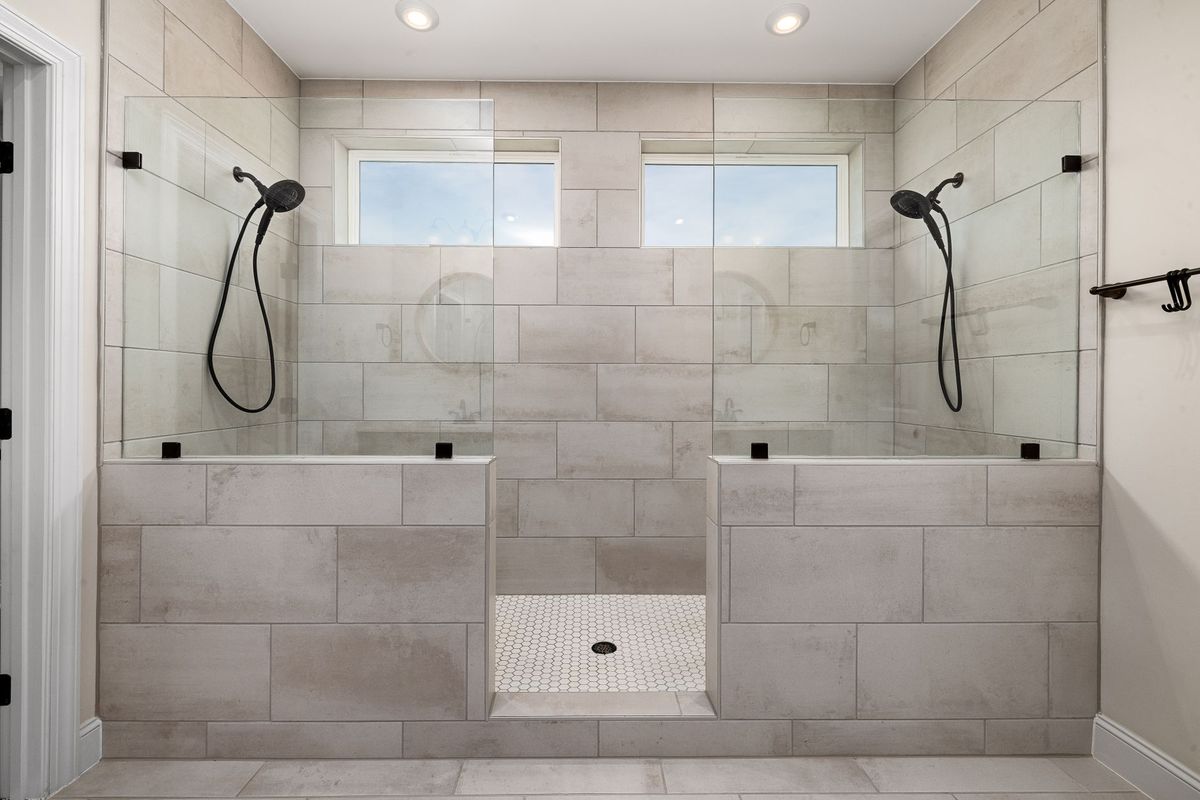
A 12 × 12 in tile is one square foot, a 12 × 24 is two, an 18 × 18 is 2.25 and a 24 × 24 is four; divide 144 by the tile’s area in square inches for tiles per square foot. Tile installation labor is $6–$14 per square foot — the highest of any flooring — because every tile is set by hand in thinset over backer board or an uncoupling membrane, then grouted, and large-format and mosaic tiles cost more to set than 12 × 12s. Add $1.50–$3 per square foot for backer board or membrane, thinset and grout, and $2–$10 for the tile itself, and a tiled floor runs $10–$25 per square foot installed; a 60 sq ft bathroom floor is $600–$1,500.
| Tile size | Tiles per sq ft | 100 sq ft | 144 sq ft (12 × 12 room) | 200 sq ft |
|---|---|---|---|---|
| 12 × 12 in | 1.00 | 111 | 159 | 221 |
| 12 × 24 in | 0.50 | 56 | 80 | 111 |
| 18 × 18 in | 0.44 | 49 | 71 | 98 |
| 24 × 24 in | 0.25 | 28 | 40 | 56 |
| 6 × 24 in | 1.00 | 111 | 159 | 221 |
| 6 × 36 in | 0.67 | 74 | 106 | 147 |
| 4 × 12 in | 3.00 | 331 | 476 | 661 |
| 3 × 6 in | 8.00 | 881 | 1268 | 1761 |
| 2 × 2 in mosaic (12 × 12 sheet) | 1.00 | 111 | 159 | 221 |
Mosaic tiles come on 12 × 12 in mesh sheets, so count sheets as 12 × 12 tiles. Large-format tile (any side over 15 in) needs a flatter floor — ⅛ in over 10 ft — and 15% waste.
Buy tile by the box (most are 8–15 sq ft) from a single dye lot and keep the leftovers: a cracked tile ten years on is unfixable without a match. Grout joints matter for quantity too — a 12 × 24 with a ⅛-in joint covers slightly more than two square feet per tile, which the waste allowance absorbs. Plan the layout in the bathroom planner or kitchen planner so the cut tiles land along the least visible wall.
Carpet: square yards, 12-foot rolls and replacement cost
Carpet is priced by the square yard (9 sq ft) and cut from 12-ft-wide rolls, which changes the quantity math. A 12 × 12 room is 16 sq yd and uses one 12-ft cut with no seam; a 10 × 12 room still needs a 12 × 12 cut, so you pay for 16 sq yd to cover 13.3. A 14 × 16 room needs a 12 × 16 piece plus a 2-ft strip seamed along one side — 12 × 16 plus 12 × 2 (cut into two 2 × 8 pieces) — about 24 sq yd for 24.9 sq yd of floor if the seam is planned well, and 32 if it is not. The calculator uses area plus the waste percentage; for an exact cut plan, draw the rooms at 12-ft width and let the installer check the seams.
Replacing carpet costs $4.50–$10 per square foot installed in 2026: $2–$7 for the carpet, $0.50–$1 for pad, $1–$3 for labor, plus $0.50 per square foot to pull and dispose of the old carpet and tack strip. A 12 × 12 bedroom is $650–$1,450; three bedrooms and a hall (about 500 sq ft) are $2,300–$5,000. Pad is where quotes hide money: 8-lb rebond pad at $0.75 per square foot outlasts 6-lb pad by years and makes a mid-grade carpet feel like a better one. Stairs are $10–$25 per step extra for carpet (each step is a separate wrap), far less than for hardwood.
| Material | Buy | Units | Material | Labor | Underlayment | Installed | Per sq ft |
|---|---|---|---|---|---|---|---|
| Laminate | 537 sq ft | 27 boxes | $1,342 | $1,220 | $244 | $2,806 | $5.75 |
| Vinyl plank (LVP / SPC) | 537 sq ft | 23 boxes | $1,879 | $1,220 | $0 | $3,099 | $6.35 |
| Sheet vinyl (12-ft rolls) | 537 sq ft | 60 sq yd | $1,074 | $976 | $0 | $2,050 | $4.20 |
| Engineered hardwood | 537 sq ft | 25 boxes | $3,221 | $1,952 | $293 | $5,466 | $11.20 |
| Solid hardwood | 537 sq ft | 27 boxes | $3,758 | $2,440 | $98 | $6,295 | $12.90 |
| Porcelain or ceramic tile | 537 sq ft | 269 tiles | $2,147 | $3,904 | $732 | $6,783 | $13.90 |
| Carpet (12-ft rolls) | 537 sq ft | 60 sq yd | $1,610 | $732 | $366 | $2,708 | $5.55 |
Tile at 12 × 24 in; carpet and sheet vinyl in square yards; typical prices from the cost table above with each material’s usual underlayment (pad, foam, backer board) and no tear-out or stairs. Your quote will differ — this is what the comparison table under the calculator does with your rooms.
Vinyl plank and laminate: the DIY math
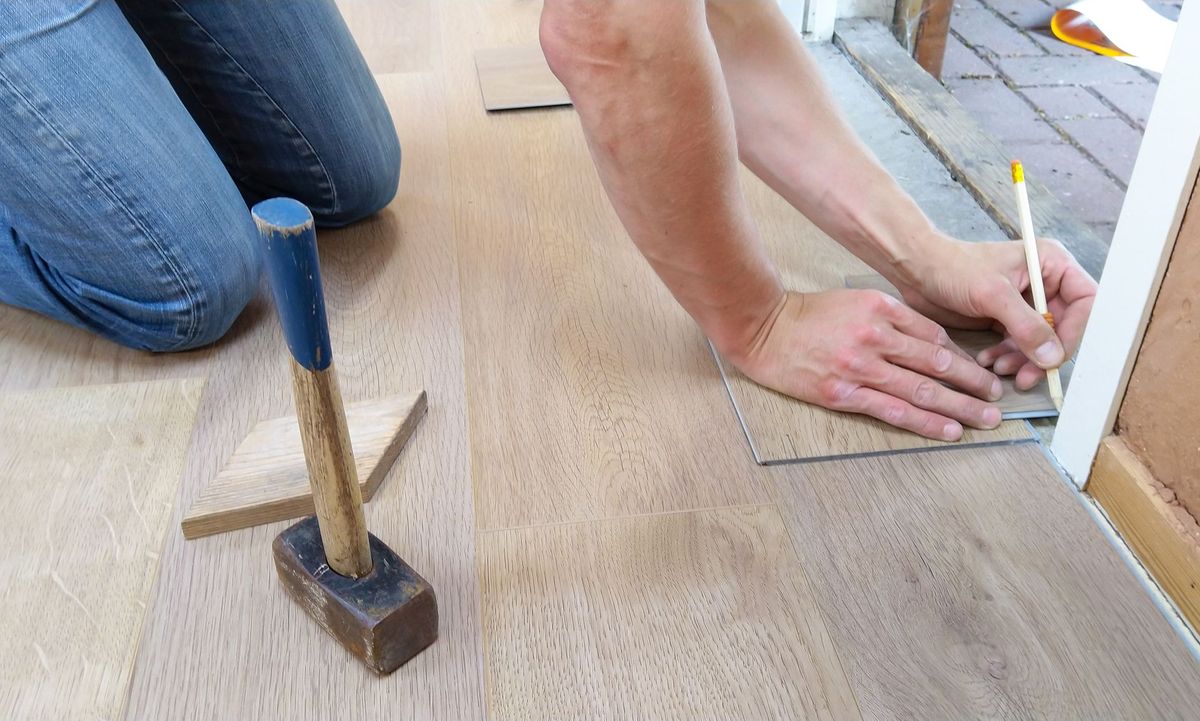
Luxury vinyl plank (LVP, or SPC for the rigid-core version) and laminate are the floors most people install themselves, and the calculator shows why: on the three-room example, labor is $1,220 of a $3,100 LVP job. Both are floating click-lock floors laid over a thin underlayment (many LVP products have the pad attached — untick the underlayment box), cut with a utility knife (vinyl) or a jigsaw (laminate), and need a ¼–⅜-in expansion gap at every wall that the baseboard or shoe molding covers. A competent first-timer lays 150–250 sq ft a day. Budget a tapping block, pull bar, spacers and a flush-cut saw for door jambs — about $60 — and a day per room.
Where to spend: a thicker wear layer on vinyl (20 mil for a hallway or kitchen, 12 mil for a bedroom) and an AC4 abrasion rating on laminate. Where not to: the “waterproof” label on laminate means the planks resist standing water for a day, not a flood; vinyl is the one to put in a basement or bathroom. Sheet vinyl at $3–$7 installed is still the cheapest hard floor for a laundry room or a rental bath, and in a 12-ft roll a small room has no seams at all. Whichever you choose, the floor is the biggest visible surface in the room: see what it does to resale with the basement ROI calculator if it is going downstairs, and check the standard room sizes guide before you assume the next owner’s furniture fits.
How this flooring calculator works and where the numbers come from
Floor area = the sum of width × length for each room plus the extra area. Quantity to buy = area × (1 + waste). Boxes = quantity ÷ coverage per box, rounded up; tiles = quantity × 144 ÷ (tile width × tile length), rounded up; carpet and sheet vinyl = quantity ÷ 9 square yards, rounded up. Material cost = quantity × price per sq ft; labor, underlayment and removal = area × their price per sq ft; stairs = count × price per stair. The comparison prices the same rooms in each material at the default material price, labor and usual underlayment with your waste, removal and stairs. Default prices are the midpoints of the 2026 ranges in the cost table and are estimates, not quotes.
- Angi / HomeAdvisor flooring cost guides (installation cost by material, 2025–26)
- Fixr flooring installation and hardwood refinishing cost guides
- National Wood Flooring Association: installation and refinishing guidelines
- Tile Council of North America Handbook: substrate flatness and large-format tile
- Manufacturer box coverage (Pergo, Shaw, Mohawk, LifeProof, Bruce product labels) — laminate 18–26 sq ft, LVP 20–30, engineered 18–30, solid 18–24
Last reviewed November 6, 2026. Estimates only — verify local figures before you commit money.
Flooring Calculator: FAQ
How many boxes of flooring do I need for a 12×12 room? +
8 boxes of laminate at 20 sq ft per box, or 7 boxes of vinyl plank at 24 sq ft. A 12 × 12 room is 144 sq ft; with 10% waste you buy 158 sq ft, and 158 ÷ 20 = 7.9, rounded up to 8. Check the coverage printed on your box — brands range from 18 to 30 sq ft.
How do I calculate how much flooring I need? +
Multiply each room’s width by its length in feet, add the rooms together, then add 10% for waste (15% for diagonal patterns or large tiles, 20% for herringbone). Divide by the square feet per box and round up for planks, by 9 for carpet square yards, or multiply by tiles per square foot for tile.
How much does it cost to install hardwood floors? +
About $9–$20 per square foot installed for solid hardwood ($5–$12 material, $4–$8 labor) and $7–$18 for engineered in 2026. A 500 sq ft area is $4,500–$10,000 in solid hardwood; stairs add $40–$100 per step and tear-out $0.50–$3 per square foot.
How much does it cost to refinish hardwood floors? +
$3–$8 per square foot to sand and refinish, so $1,500–$4,000 for 500 sq ft; staining adds $1–$2 per square foot, and a screen-and-recoat without sanding is $1–$2. Refinishing beats replacing unless the boards are worn through, water-damaged or you want a different wood.
How much does it cost to replace carpet? +
$4.50–$10 per square foot installed: $2–$7 for carpet, $0.50–$1 for pad, $1–$3 for labor, plus about $0.50 per square foot to remove the old carpet. A 12 × 12 bedroom runs $650–$1,450 and three bedrooms with a hall about $2,300–$5,000.
How much does vinyl plank flooring cost to install? +
$4–$11 per square foot installed in 2026: $2–$7 for the planks and $2–$4 for labor, plus $0.50 for underlayment if the planks have no attached pad. Installed yourself, a 12 × 12 room is about $550–$600 in materials (7 boxes at 24 sq ft) and a day’s work.
How much is tile installation labor per square foot? +
$6–$14 per square foot for floor tile, the highest labor rate of any flooring, with large-format, mosaic and patterned layouts at the top of the range. Add $1.50–$3 for backer board or membrane, thinset and grout, and $2–$10 for the tile: $10–$25 per square foot installed.
How many square yards of carpet for a 12×12 room? +
16 square yards: 144 sq ft ÷ 9. Carpet comes on 12-ft-wide rolls, so a 12 × 12 room uses one 12-ft cut with no seams and no waste. A 10 × 12 room still needs a 12 × 12 cut (16 sq yd) because the roll cannot be bought narrower.
Related tools and data
Room Size Calculator
Square feet, paint, flooring, tiles and what fits in one room.
Renovation Cost Calculator
Flooring beside the kitchen, bath and the rest of a remodel.
Kitchen Remodel ROI
What a remodel returns at resale.
Standard Room Sizes
Minimum and comfortable dimensions for every room.
Paint Calculator
Gallons for the walls and ceiling of the same rooms.
Furniture Planner
Lay out the room before the floor goes in.