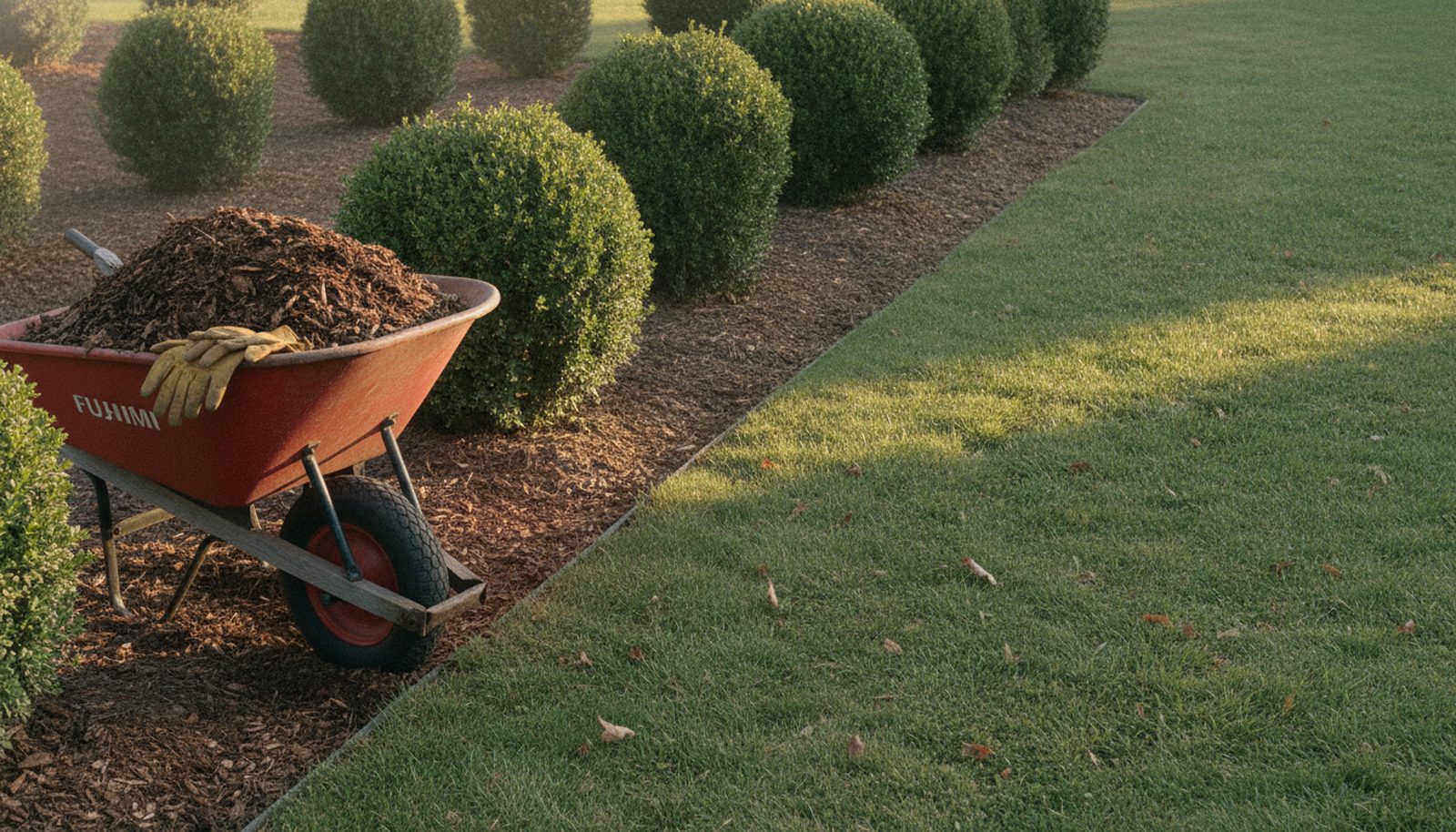
Mulch, Soil & Gravel Calculator
Cubic feet = area × depth ÷ 12; a cubic yard is 27 cubic feet. Bags round up to whole bags of the size you chose; bulk rounds up to the half yard most yards sell by. Weights are typical as-delivered densities (mulch 400–800 lb/yd, topsoil 2,000–2,200, gravel 2,700–3,000) — wet material is 20–40% heavier. Prices are editable defaults; check your local supplier.
Enter the area (rectangle, circle, triangle or a raised bed in inches) and the depth, pick the material, and get cubic feet and yards, how many bags of each size, what it weighs, and whether bulk delivery or bags is cheaper.
Pick the material first: it sets the usual depth (3 in for mulch, 4 in for topsoil, 12 in for a raised bed, 2 in for pea gravel), the bag size it is normally sold in and typical prices, all of which you can overwrite. Then describe each area — a rectangle or circle in feet, a raised bed in inches, a triangle for an odd corner — and add more areas for a whole yard. The result is cubic feet and cubic yards (the unit bulk suppliers sell by), bags in every size, the weight you will be hauling, and a bulk-versus-bags cost verdict.
How many cubic yards of mulch, soil or gravel do I need?
Multiply the area in square feet by the depth in inches and divide by 324: that is the cubic yards. One cubic yard covers 324 sq ft at 1 in deep, 108 sq ft at 3 in, and 81 sq ft at 4 in. A 10 × 20 ft bed mulched 3 in deep is 200 × 3 ÷ 324 = 1.85 yards, which is 25 two-cubic-foot bags or two scoops from a landscape yard. A cubic yard is 27 cubic feet, so a 4 × 8 ft raised bed 12 in deep (32 cu ft) needs 1.2 yards of soil.
The yard math
- Square feet × depth in inches ÷ 12 = cubic feet.
- Cubic feet ÷ 27 = cubic yards.
- Shortcut: square feet × inches ÷ 324 = cubic yards.
- Circle: 3.14 × (diameter ÷ 2)² for the area. A 10-ft-diameter tree ring is 78.5 sq ft; at 3 in that is 0.73 yards.
- Raised bed: length × width × height in inches ÷ 1,728 = cubic feet (a 48 × 96 × 12 in bed is 32 cu ft).
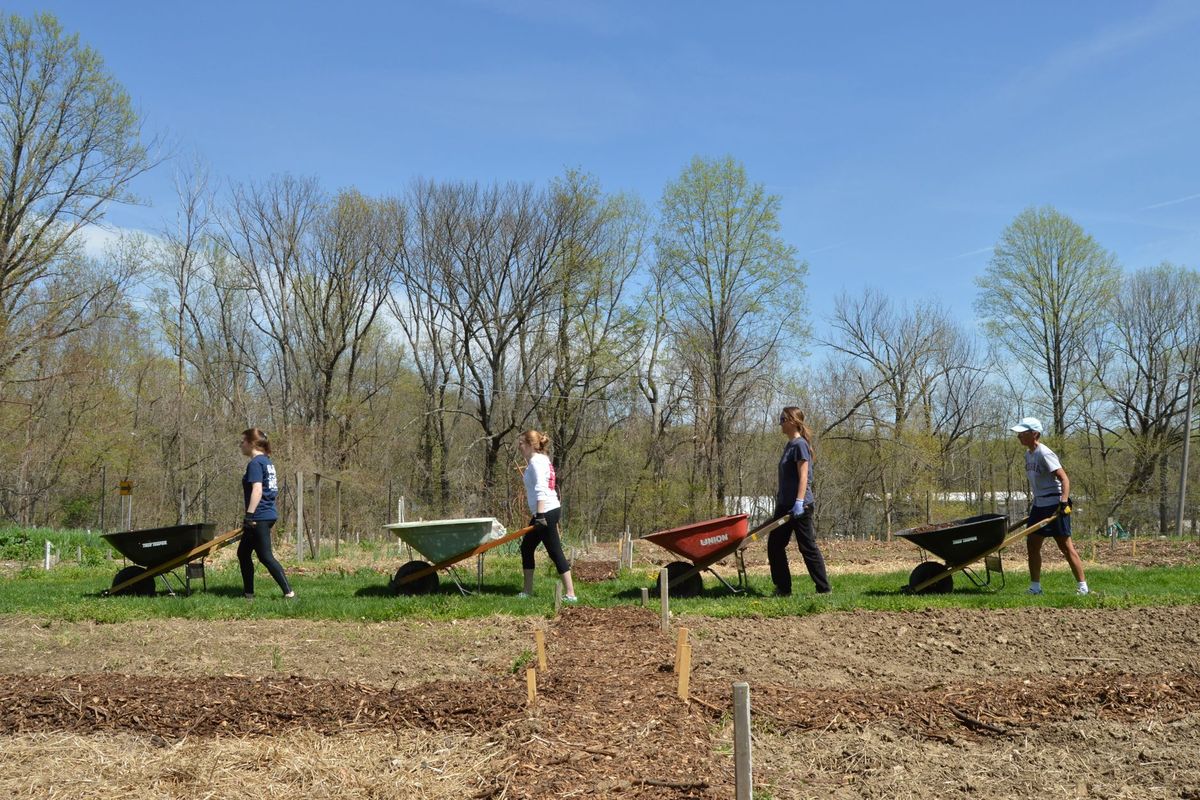
| Depth | One cubic yard covers | Half a yard covers | Depth in feet |
|---|---|---|---|
| 1 in | 324 sq ft | 162 sq ft | 0.08 ft |
| 2 in | 162 sq ft | 81 sq ft | 0.17 ft |
| 3 in | 108 sq ft | 54 sq ft | 0.25 ft |
| 4 in | 81 sq ft | 41 sq ft | 0.33 ft |
| 6 in | 54 sq ft | 27 sq ft | 0.50 ft |
| 8 in | 40.5 sq ft | 20 sq ft | 0.67 ft |
| 12 in | 27 sq ft | 14 sq ft | 1.00 ft |
1 cu yd = 27 cu ft = 46,656 cu in. Coverage assumes the material is spread evenly and not compacted; mulch and soil settle 10–20% over a season.
Round up, and if the bed is irregular, measure it as a rectangle that contains it. Landscape yards sell by the half or whole yard and will not scoop 1.85 of anything; order 2. For bags, 1.85 yards is 50 cubic feet, which at 2 cu ft per bag is 25 bags — 27 with the 5% allowance the calculator adds for settling and the bag that splits in the car.
How many bags make a cubic yard?
It depends on the bag: 13.5 two-cubic-foot bags of mulch, 18 bags of 1.5 cu ft raised-bed mix, 27 one-cubic-foot bags of compost, 36 forty-pound bags of topsoil (0.75 cu ft) or 54 half-cubic-foot bags of gravel make one cubic yard. Bag labels state the volume in cubic feet (or quarts for potting mix: 1 cu ft = 25.7 dry quarts), and the weight on a soil or gravel bag is a poor guide to volume because moisture changes it by a third.
| Bag size | Bags per cu yd | 10 cu ft (100 sq ft at 1 in) | 32 cu ft (4 × 8 ft bed, 12 in) | Sold this way |
|---|---|---|---|---|
| 0.5 cu ft | 54 | 20 | 64 | Gravel, river rock, sand (40–50 lb) |
| 0.75 cu ft | 36 | 14 | 43 | Topsoil, manure (40 lb) |
| 1 cu ft | 27 | 10 | 32 | Compost, potting mix |
| 1.5 cu ft | 18 | 7 | 22 | Raised-bed and garden soil |
| 2 cu ft | 14 | 5 | 16 | Mulch (most brands) |
| 3 cu ft | 9 | 4 | 11 | Mulch, big-box bulk bags |
Bags rounded up. A 40-lb bag of topsoil is about 0.75 cu ft dry; a 50-lb bag of gravel or sand about 0.5 cu ft; most mulch is 2 cu ft, big-box “bulk” bags 3 cu ft.
The practical ceiling for bags is about one cubic yard: 14 bags of mulch is one cart and one trunk load, 36 bags of topsoil (1,440 lb) is not. Past a yard the price also turns: at $4 a bag, 2-cu-ft mulch is $54 a yard, and at $8 a bag, 1.5-cu-ft bed mix is $144 a yard — two to three times the bulk price. The calculator prices both for your quantities.
How much does a yard of topsoil, mulch or gravel weigh?
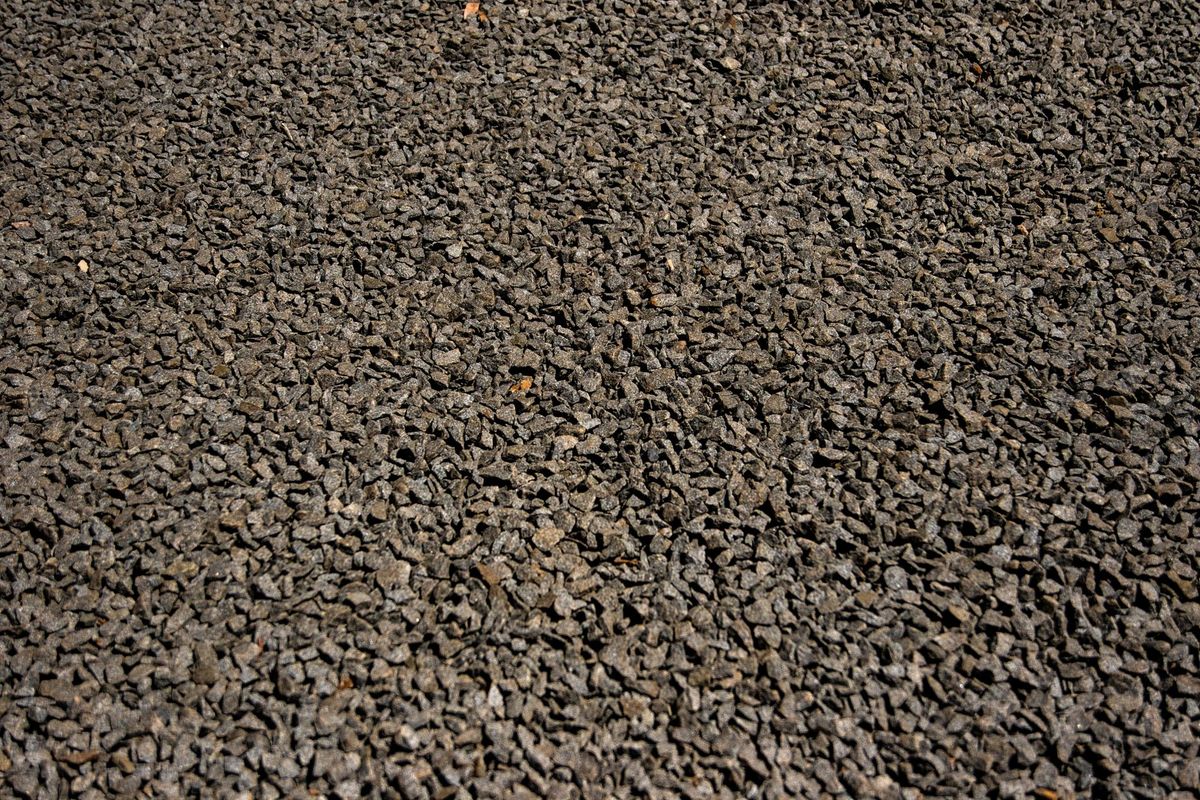
A cubic yard of topsoil weighs about 2,000–2,200 lb dry and up to 2,700 lb wet; a yard of mulch 400–800 lb; compost about 1,000 lb; sand 2,600–2,800 lb; pea gravel and ¾-in crushed stone 2,700–3,000 lb; river rock around 2,900 lb. Weight matters for two reasons. The first is the truck: a half-ton pickup is rated for roughly 1,500–2,000 lb of payload, so it will carry a yard of mulch but only half a yard of topsoil or gravel, and the suspension says so. The second is the bill — gravel yards often price by the ton, and a “yard” of ¾-in stone is about 1.4 tons.
| Material | Weight per cu yd | Tons per cu yd | Half-ton pickup load (1,500 lb) | Typical bulk price per yd |
|---|---|---|---|---|
| Hardwood mulch (shredded) | 600 lb | 0.30 | 1 yd (600 lb) | $35 |
| Bark or cedar mulch | 500 lb | 0.25 | 1 yd (500 lb) | $45 |
| Dyed mulch (black, brown, red) | 650 lb | 0.33 | 1 yd (650 lb) | $40 |
| Topsoil (screened) | 2,100 lb | 1.05 | ½ yd (1,050 lb) | $30 |
| Raised-bed or garden soil mix | 1,500 lb | 0.75 | 1 yd (1,500 lb) | $45 |
| Compost | 1,000 lb | 0.50 | 1 yd (1,000 lb) | $40 |
| Pea gravel | 2,800 lb | 1.40 | ½ yd (1,400 lb) | $45 |
| ¾-in crushed gravel or stone | 2,800 lb | 1.40 | ½ yd (1,400 lb) | $45 |
| River rock (1–3 in) | 2,900 lb | 1.45 | ½ yd (1,450 lb) | $90 |
| Sand (paver or all-purpose) | 2,700 lb | 1.35 | ½ yd (1,350 lb) | $40 |
| Limestone screenings / stone dust | 2,900 lb | 1.45 | ½ yd (1,450 lb) | $40 |
Typical as-delivered weights; moisture adds 20–40% to soil, compost and mulch. Pickup loads are by the 1,500-lb payload of a typical half-ton truck; check the door-jamb sticker. Prices are 2026 landscape-yard ranges before delivery and vary by region.
If you are hauling it yourself, the yard loads with a bucket that holds about one yard and will not stop at half a scoop of gravel to protect your springs; ask for a half-yard scoop or take two trips. If it is delivered, a dump truck needs 10 ft of width and 14 ft of overhead clearance, and the pile goes where the driver can reach, which is rarely the back garden. Price the delivery fee (typically $50–$150) against the bags before you decide. For a base under a slab or pavers, size the gravel here and the concrete with the concrete slab calculator.
How deep should mulch, soil and gravel be?
Depth decides the quantity more than area does, and the common mistakes are too much mulch (it rots bark and smothers roots above 4 in) and too little gravel (2 in of ¾-in stone on soft ground disappears in a year). The depths below are the ones nurseries, extension services and paver manufacturers recommend; the calculator uses them as defaults.
| Use | Depth | Notes |
|---|---|---|
| Mulch, flower beds | 2–3 in | 3 in for coarse hardwood, 2 in for fine or dyed; refresh 1 in a year |
| Mulch, around trees | 2–4 in | Pull it 3–6 in back from the trunk; no volcanoes |
| Playground mulch (engineered wood fiber) | 9–12 in | CPSC guidance for a 6–8 ft fall height; compacts to 9 in |
| Topsoil, new lawn | 4–6 in | Over a loosened subsoil; 6 in for sod on poor ground |
| Topsoil, top-dressing a lawn | ¼–½ in | Rake in; about 1 yd per 650–1,300 sq ft |
| Raised bed | 8–12 in | 12 in for vegetables; fill with bed mix, not straight topsoil |
| Compost, amending a bed | 1–2 in | Tilled 6–8 in into the soil |
| Pea gravel path | 2–3 in | Over landscape fabric with an edge; 3 in walks better than 2 |
| Gravel driveway, new | 6–8 in total | 4 in of crushed base + 2–3 in of ¾-in top, compacted in lifts |
| Gravel driveway, refresh | 1–2 in | Top layer only; about 1 yd per 160–320 sq ft |
| Paver base | 4–6 in crushed + 1 in sand | 6 in base under a driveway; screed the sand bed, do not compact it |
| River rock bed | 2–3 in | 1.5–2 × the stone size, over fabric |
Gravel driveways and paver bases are laid in compacted 2–3 in lifts; order 10–15% more than the calculated volume for compaction. Playground depth from U.S. CPSC Public Playground Safety Handbook.
Two depth rules that save money: mulch that is being refreshed needs 1 in, not 3 — rake the old layer and top it up, which cuts the order by two-thirds; and a raised bed does not have to be solid bed mix. Fill the bottom third of a 12-in bed with logs, branches or straight topsoil and the top 8 in with bed mix, and the 1.2 yards of $45 mix becomes 0.8 yards.
Raised-bed soil: a worked example
A standard 4 × 8 ft raised bed 12 in deep holds 32 cubic feet, or 1.19 cubic yards: 48 in × 96 in × 12 in = 55,296 cu in ÷ 1,728 = 32 cu ft. With 5% for settling, buy 33.6 cu ft, which is 23 bags of 1.5 cu ft bed mix (about $185 at $8 a bag) or 1.5 yards bulk (rounded up from 1.24; about $70 plus a $60 delivery). Two beds are 2.4 yards — order 2.5 yards and it costs less than the bags for one bed. Fill 8 in deep instead of 12 and the figures drop by a third: 21.3 cu ft, 0.8 yards, 15 bags.
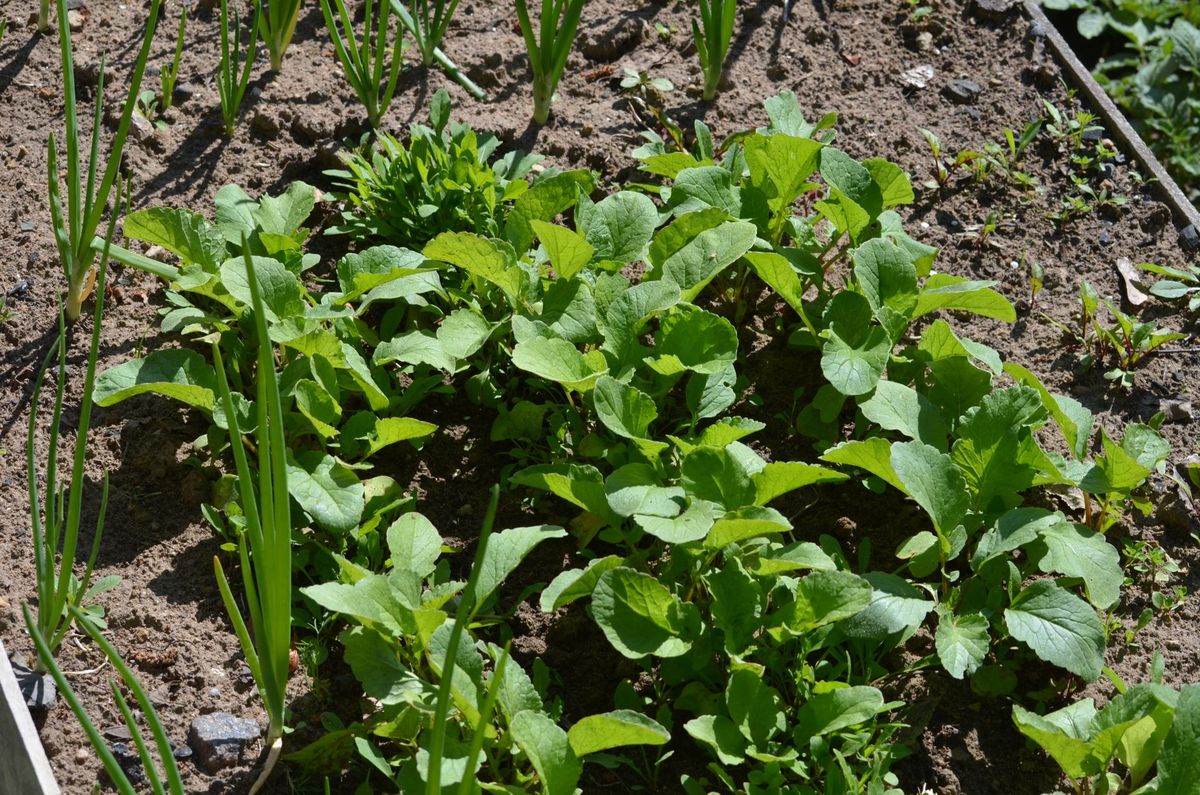
What to fill it with: a mix of roughly 60% topsoil, 30% compost and 10% coarse material (perlite, pine bark fines or coarse sand) by volume is what most extension services suggest, which is what a bagged “raised bed mix” is. Buying the parts separately in bulk costs half as much per yard: for a 1.2-yard bed that is 0.7 yards of topsoil, 0.4 yards of compost and a couple of bags of perlite. Straight topsoil compacts and drains poorly in a box; straight compost shrinks by half in a season. Plan for the bed to settle 2–3 in over the first year and top it up with compost each spring.
How much is mulch by the yard, and when is bulk cheaper than bags?
Bulk hardwood mulch sells for about $30–$60 per cubic yard at landscape yards in 2026, dyed or bark mulch $40–$70, cedar and premium barks $60–$100; topsoil $20–$50 a yard, compost $30–$60, pea gravel and crushed stone $40–$70, river rock $80–$150, with delivery fees of $50–$150 per load on top. Bagged, a 2-cu-ft bag of mulch is $3–$6, which is $40–$80 per yard — before you have carried 14 bags. The crossover is around one yard: below it, the delivery fee makes bulk cost more unless you can collect it; above it, bulk wins by a widening margin and delivery is a single line item on a 3-yard order.
When bags still make sense
- Under half a yard — no one delivers that little, and the bags fit in a hatchback.
- A specific product (cedar, pine bark nuggets, rubber mulch, potting mix) your local yard does not stock in bulk.
- No access for a dump truck, or nowhere to put a pile.
- Spreading over weeks: bags store; a pile of mulch heats up and a pile of topsoil grows weeds.
Before you order bulk, measure the areas again — the calculator’s Add another area rows let you total the beds, the tree rings and the path in one order — and ask the yard whether the price is per yard or per ton (gravel is often per ton; a yard of ¾-in stone is 1.4 tons). Then check the delivery fee against the pickup trips the calculator shows. For edging, borders and the fence line the mulch runs along, the fence builder and deck builder give you lengths and footprints to plug in; for the sand and gravel under pavers, see the depth table above.
How this mulch, soil & gravel calculator works and where the numbers come from
Area: rectangle = length × width; circle = π × (diameter ÷ 2)²; triangle = base × height ÷ 2; raised bed = length × width in inches ÷ 144, with the bed height as the depth. Cubic feet = area × depth ÷ 12; cubic yards = cubic feet ÷ 27. The order adds 5% when the settling box is ticked. Bags = order cubic feet ÷ bag size, rounded up; bulk rounds up to the half yard. Weight = order yards × a typical as-delivered density per material. Pickup trips use a 1,500-lb payload. Bulk cost = bulk yards × price per yard + delivery; bagged cost = bags × price per bag. Densities, depths and prices are typical figures from landscape suppliers and extension guidance, not measurements of your material.
- U.S. CPSC Public Playground Safety Handbook (loose-fill surfacing depth)
- Interlocking Concrete Pavement Institute: residential paver base and bedding sand depths
- University extension guidance on mulch depth and raised-bed soil mixes (e.g., University of Minnesota, Oregon State) — 2–4 in mulch; 60/30/10 topsoil-compost-aggregate bed mix
- Landscape-supplier price lists and bag labels, 2025–26 — typical densities, bag volumes and bulk prices; regional variation is wide
Last reviewed November 6, 2026. Estimates only — verify local figures before you commit money.
Mulch, Soil & Gravel Calculator: FAQ
How many cubic feet of soil are in a yard? +
27 cubic feet. A cubic yard is 3 × 3 × 3 ft, so it fills thirty-six 0.75-cu-ft bags of topsoil, eighteen 1.5-cu-ft bags of garden soil, or 13.5 two-cu-ft bags of mulch, and covers 108 sq ft at 3 in deep.
How much soil do I need for a 4×8 raised bed? +
32 cubic feet (1.2 cubic yards) for a 4 × 8 ft bed 12 in deep — about 23 bags of 1.5 cu ft bed mix with a 5% allowance, or 1.5 yards bulk. At 8 in deep it needs 21 cu ft (0.8 yards, 15 bags); at 18 in, 48 cu ft (1.8 yards).
How much mulch do I need? +
Square feet × 3 in ÷ 324 = cubic yards at the usual 3-in depth, so a 10 × 20 bed needs 1.85 yards or 25 two-cu-ft bags. One yard covers 108 sq ft at 3 in or 162 sq ft at 2 in; refreshing an existing bed takes 1 in, which is one yard per 324 sq ft.
How much does a yard of topsoil weigh? +
About 2,000–2,200 lb (1–1.1 tons) dry, and up to 2,700 lb when wet. A yard of mulch weighs 400–800 lb, compost about 1,000 lb, sand 2,700 lb, and gravel 2,700–3,000 lb. A half-ton pickup carries about half a yard of topsoil or gravel and one yard of mulch.
How much is a yard of mulch? +
About $30–$60 per cubic yard for bulk hardwood mulch in 2026, $40–$70 for dyed or bark mulch and up to $100 for cedar, plus a $50–$150 delivery fee. Bagged mulch at $3–$6 per 2 cu ft works out to $40–$80 a yard, so bulk is cheaper from about one yard up.
How many bags of mulch are in a yard? +
13.5 bags of 2 cu ft, so buy 14; or 9 bags of 3 cu ft. A yard of mulch covers 108 sq ft at 3 in deep, so each 2-cu-ft bag covers 8 sq ft at 3 in or 12 sq ft at 2 in.
How do I calculate gravel in cubic yards? +
Square feet × depth in inches ÷ 324. A 12 × 40 ft driveway topped with 3 in of ¾-in gravel is 480 × 3 ÷ 324 = 4.4 yards; order 5 to allow for compaction. Gravel weighs about 1.4 tons per yard, so that is 6–7 tons if the yard prices by weight.
Is it cheaper to buy mulch in bulk or in bags? +
Bulk is cheaper above about one cubic yard: $30–$60 a yard plus delivery against $40–$80 a yard in bags. Under half a yard, bags are the only practical option; between half and one yard, it depends on the delivery fee and whether you can collect it in a pickup.
Related tools and data
Concrete Slab Calculator
Yards, bags and cost for the slab that sits on the gravel.
Deck Builder
Deck footprint and the gravel pad under it.
Fence Builder
Post count and the length of the bed along the fence.
Room Size Calculator
Square feet of any rectangle — rooms or garden beds.
Garage Size Calculator
Dimensions for the garage and its driveway.
Cost to Build Calculator
Site work, foundations and the rest of a build by state.