Flat vs eggshell vs satin vs semi-gloss: which sheen goes where?
Sheen decides how the wall survives a sponge and how much of your drywall work it shows. It does not decide how far a gallon goes.
The only thing changing here is the sheen
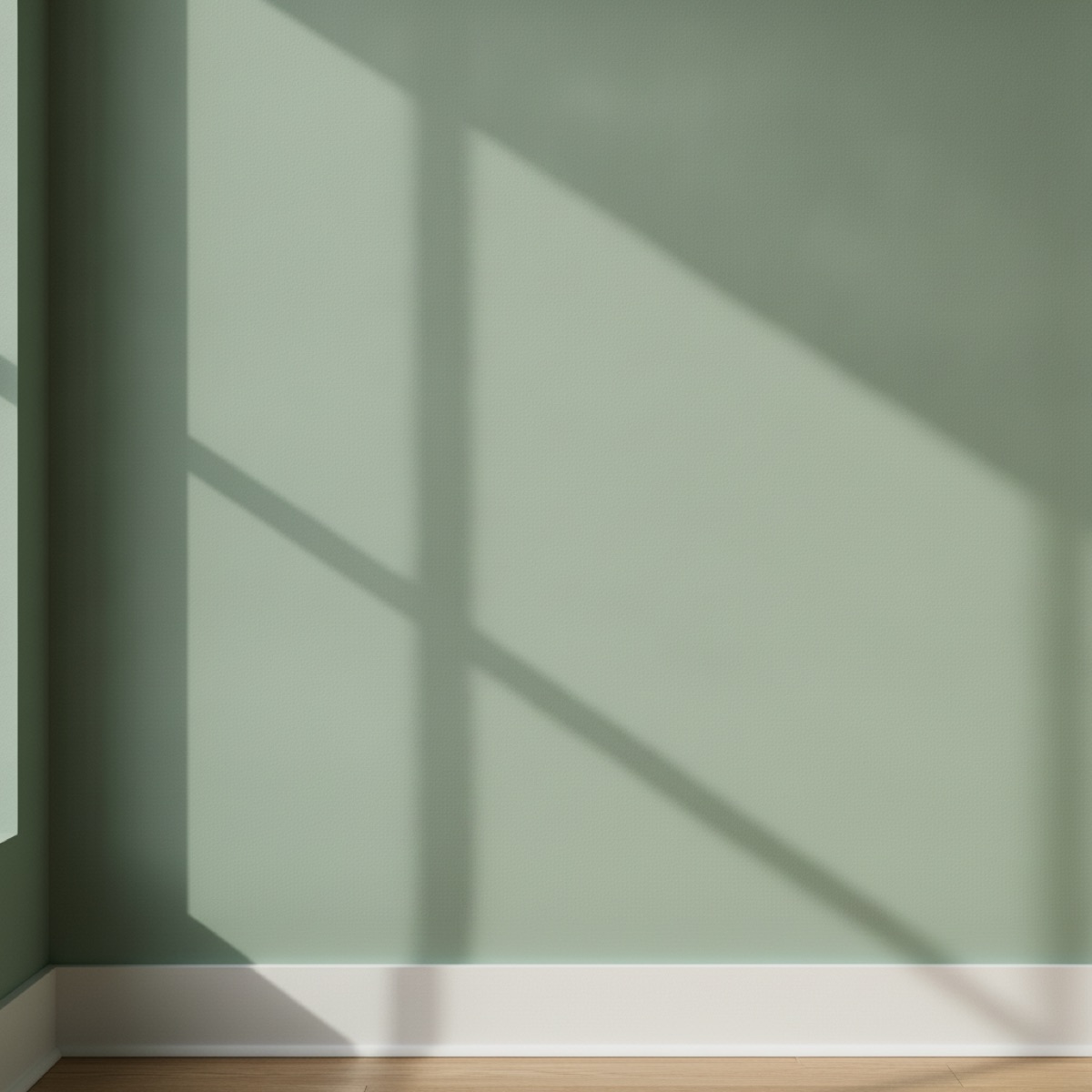
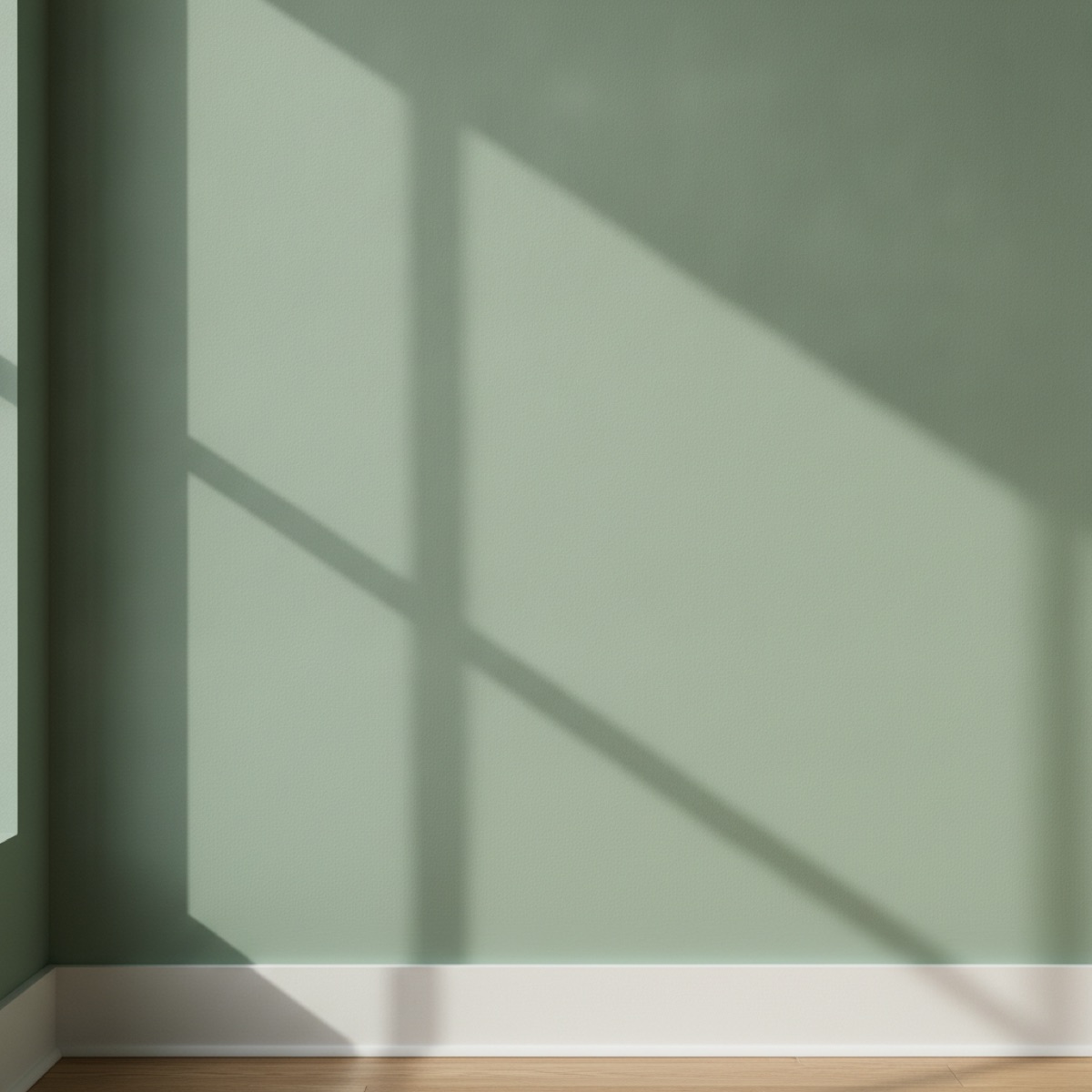
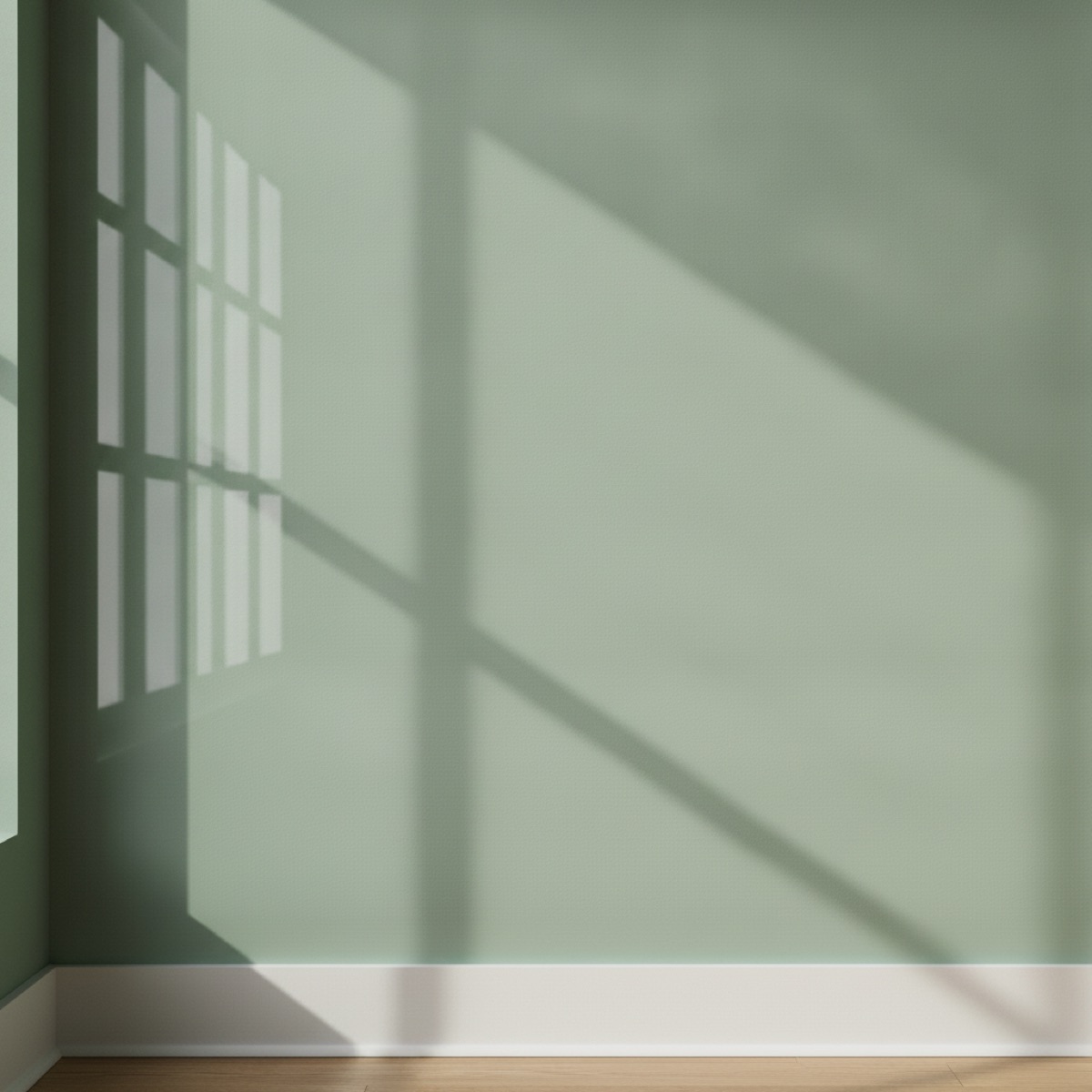
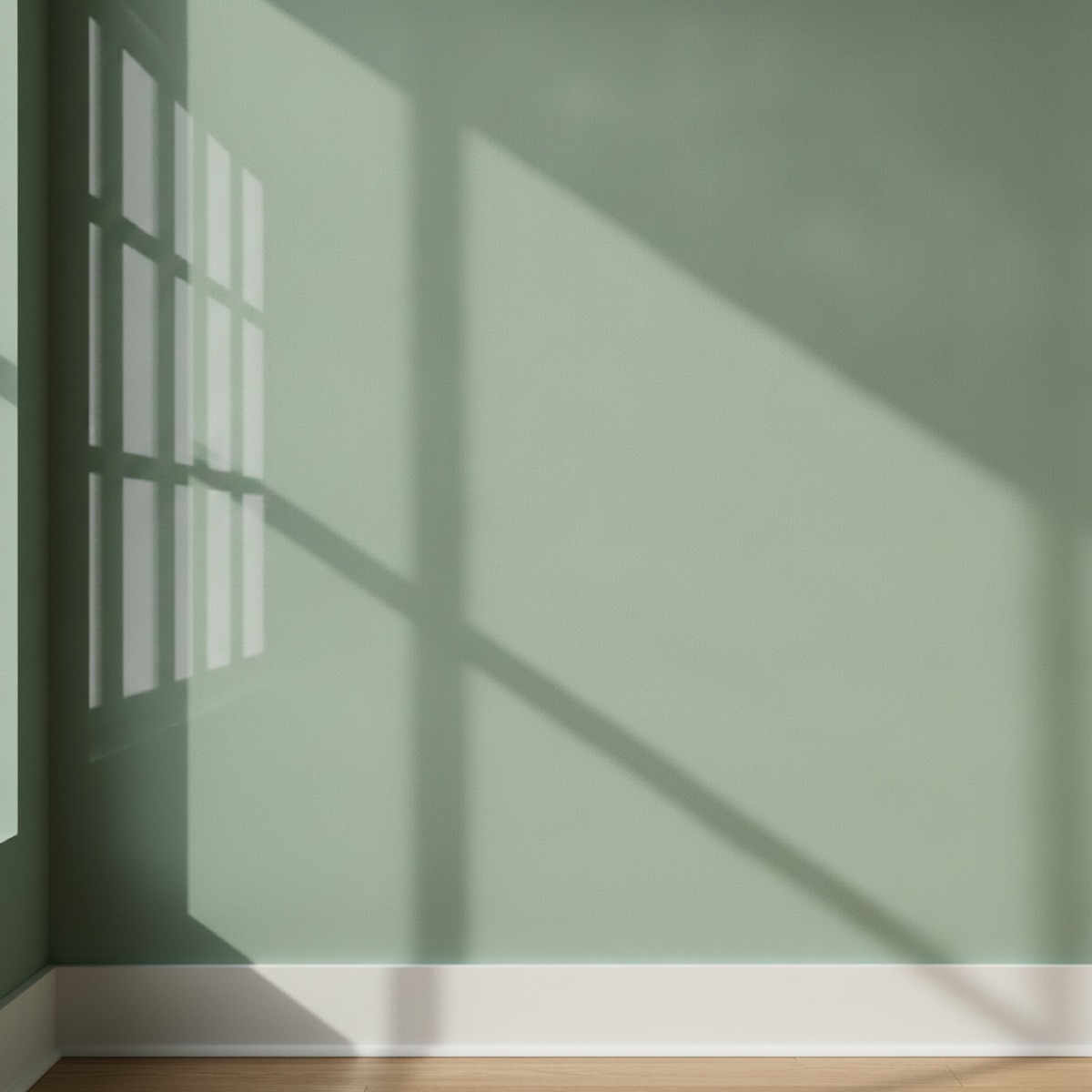
AI-rendered visualization (Gemini): one scene, edited only for the paint finish, so the reflection is the whole difference. Illustrative — judge a real sheen from a painted sample, not a screen.
The right sheen for every room
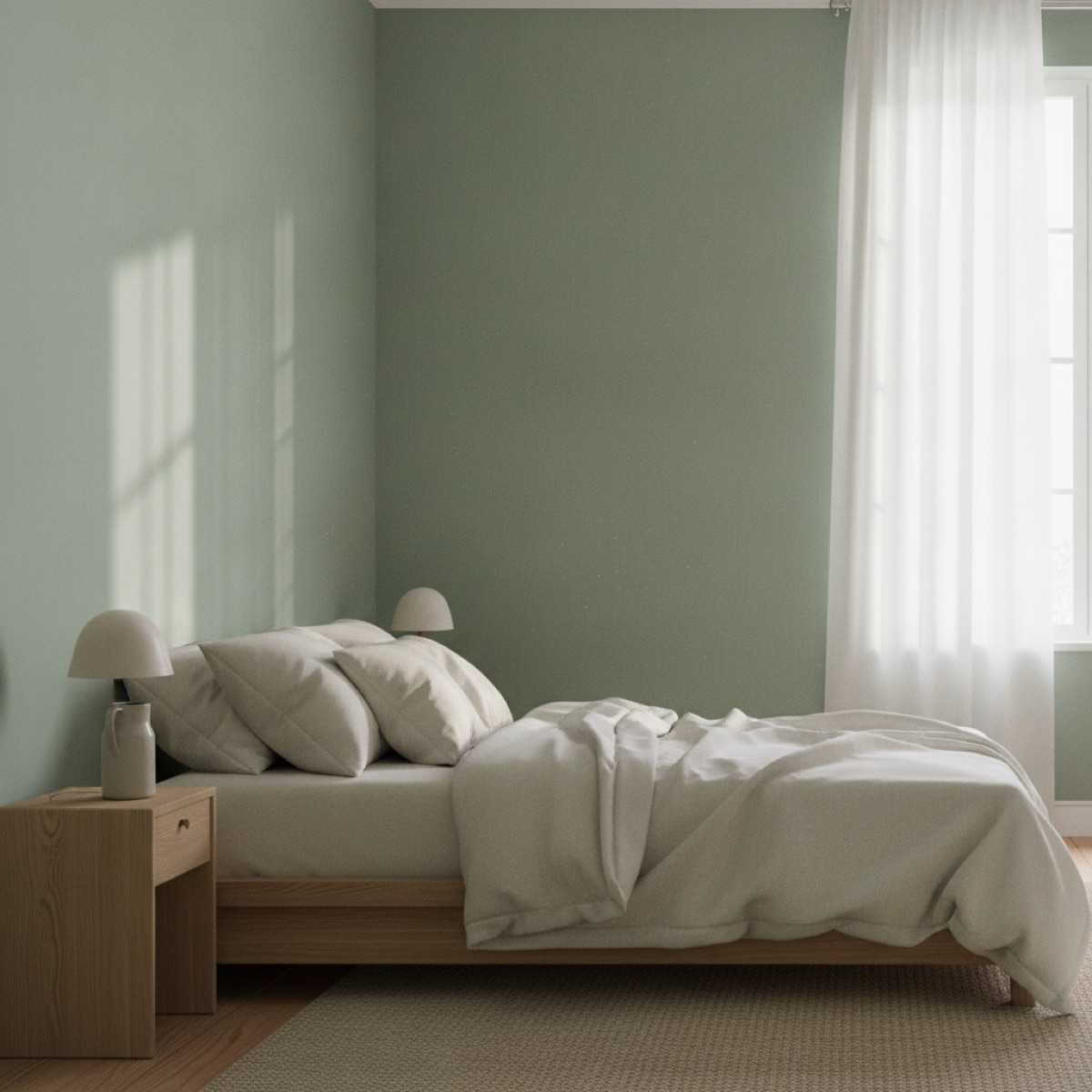
Low traffic, so a forgiving finish wins — it hides wavy drywall and old patches, and still wipes clean.
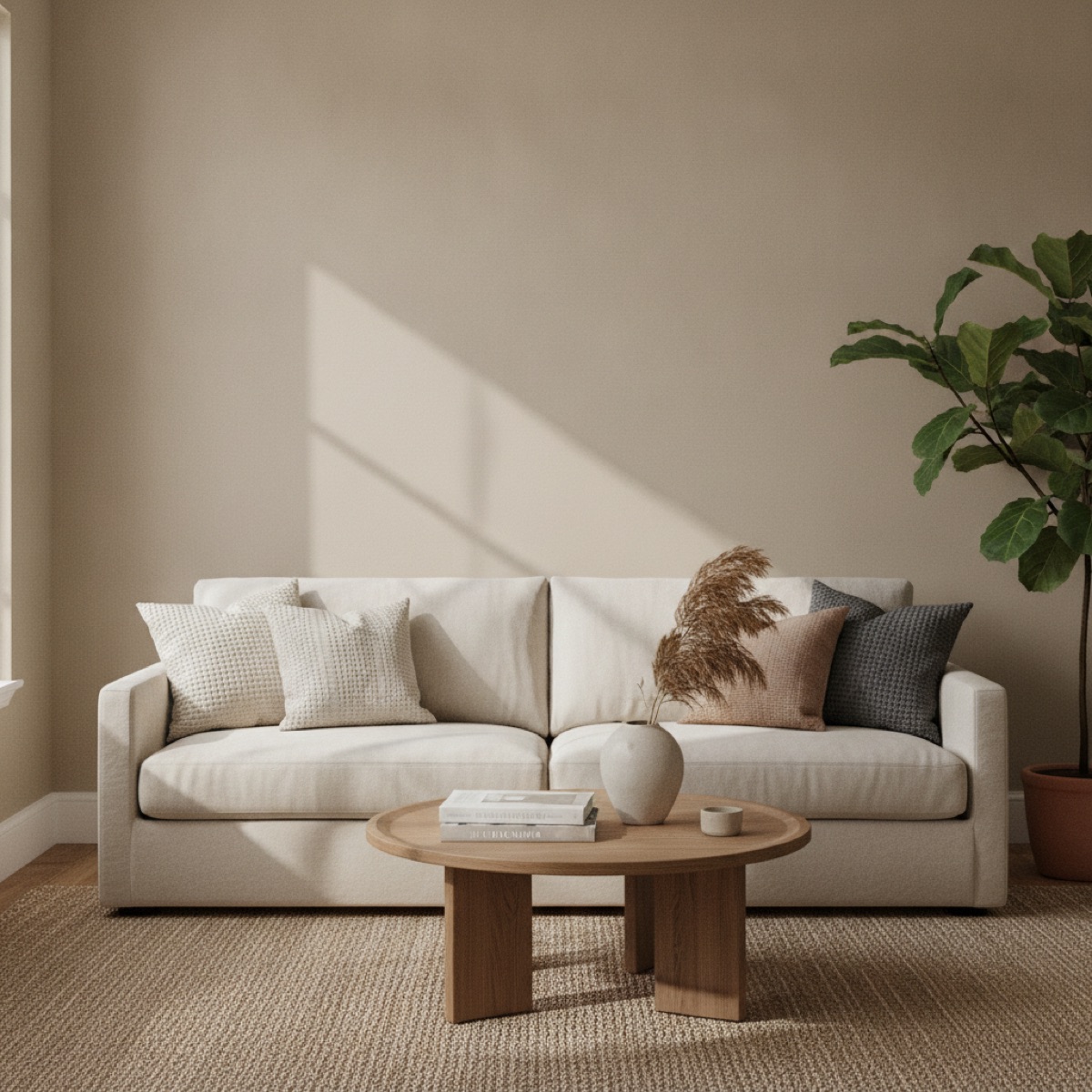
The wall default. Soft glow, takes a damp cloth, forgives the flaws every wall has.
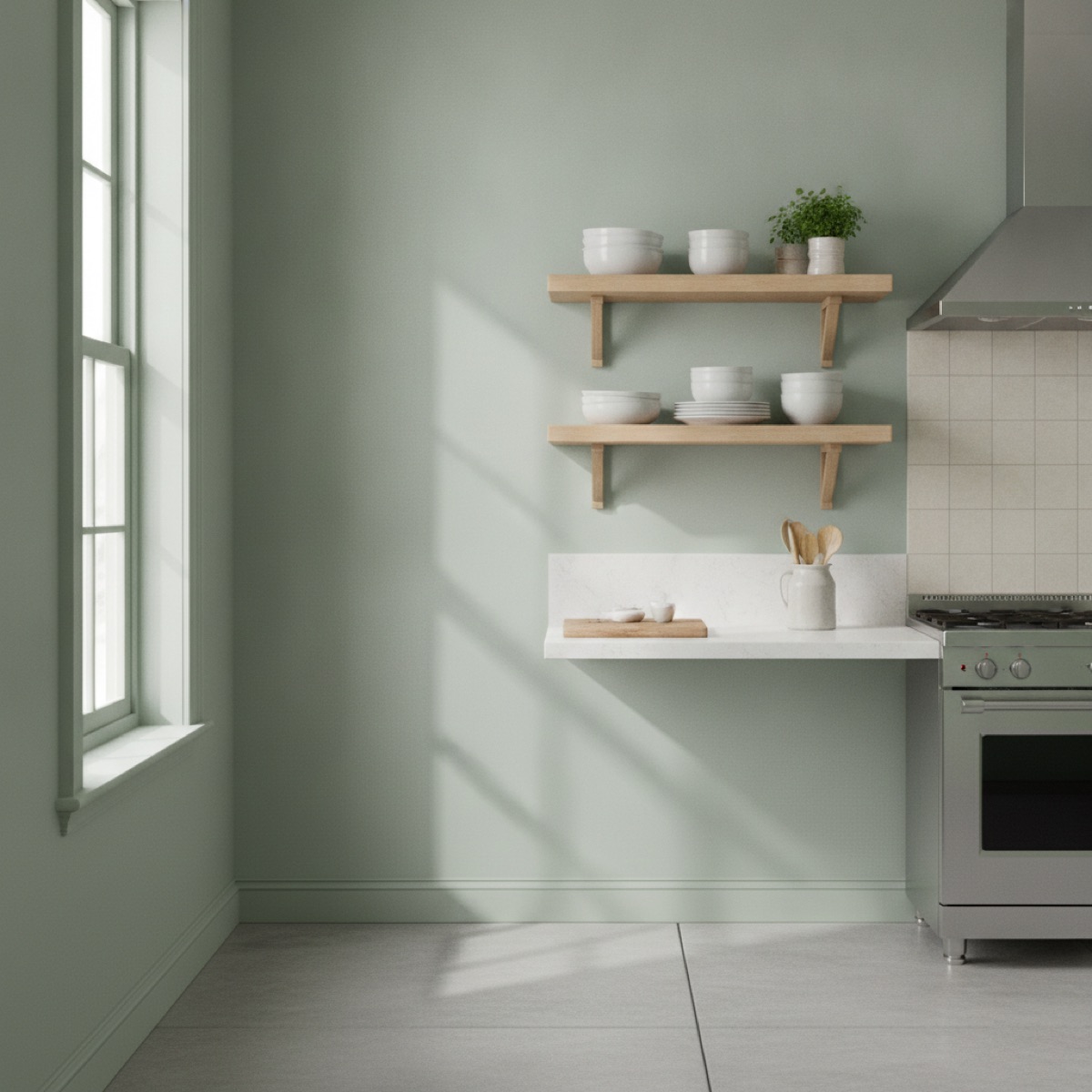
Grease and steam wipe straight off. Worth the extra wall prep satin demands.
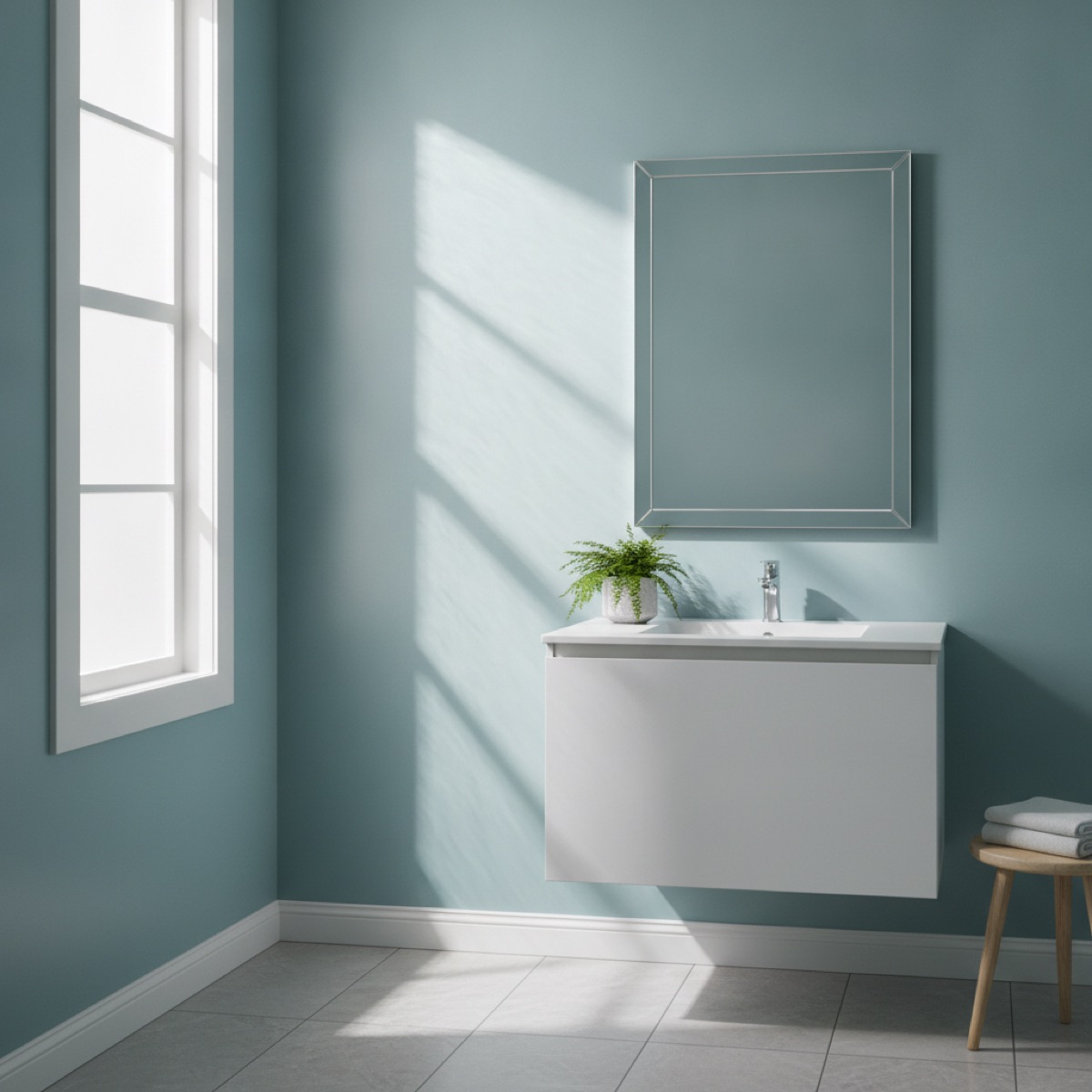
Shrugs off splash and humidity without the mirror shine of semi-gloss on a big flat wall.
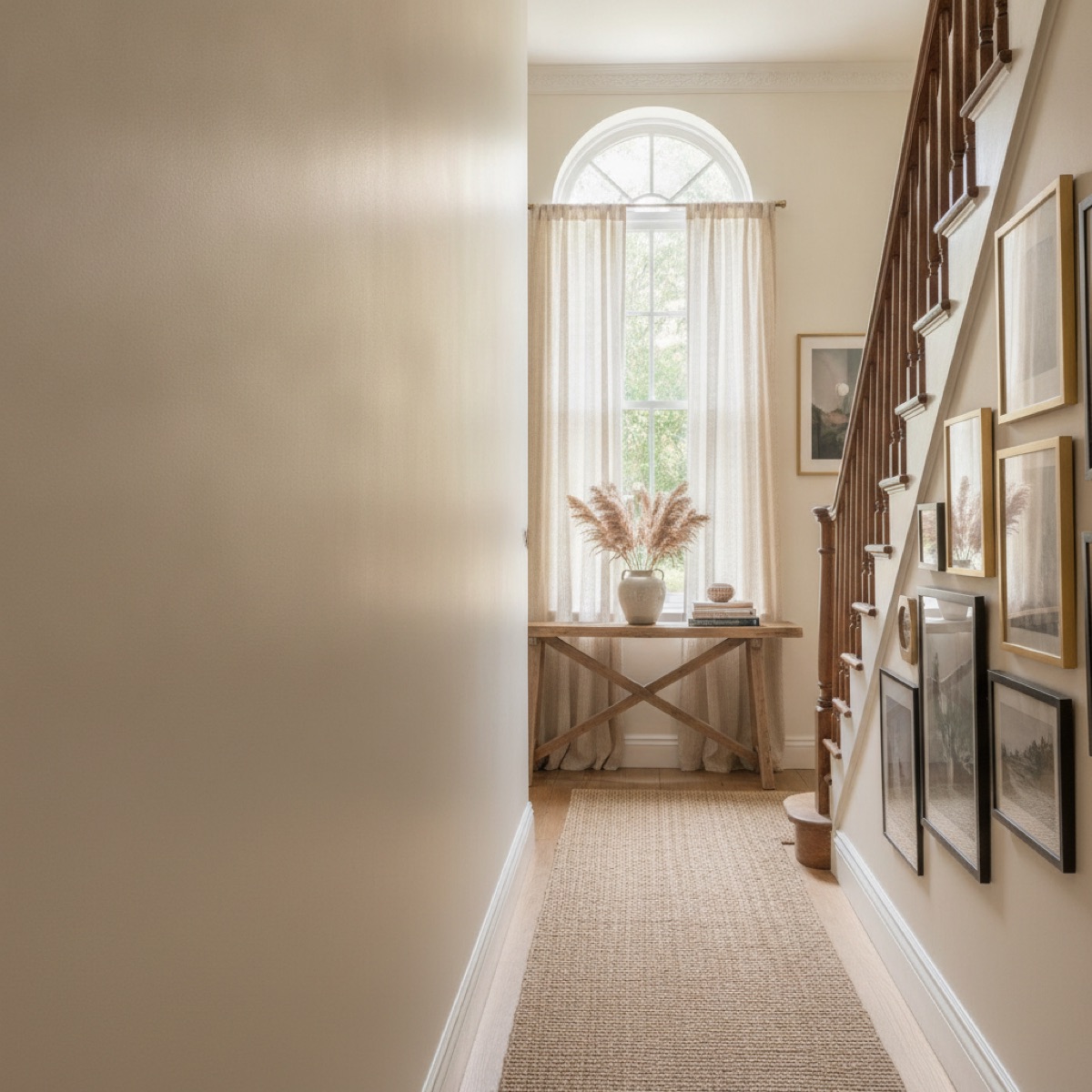
The most-touched walls in the house — scuffs, hands, backpacks. Washability wins here.
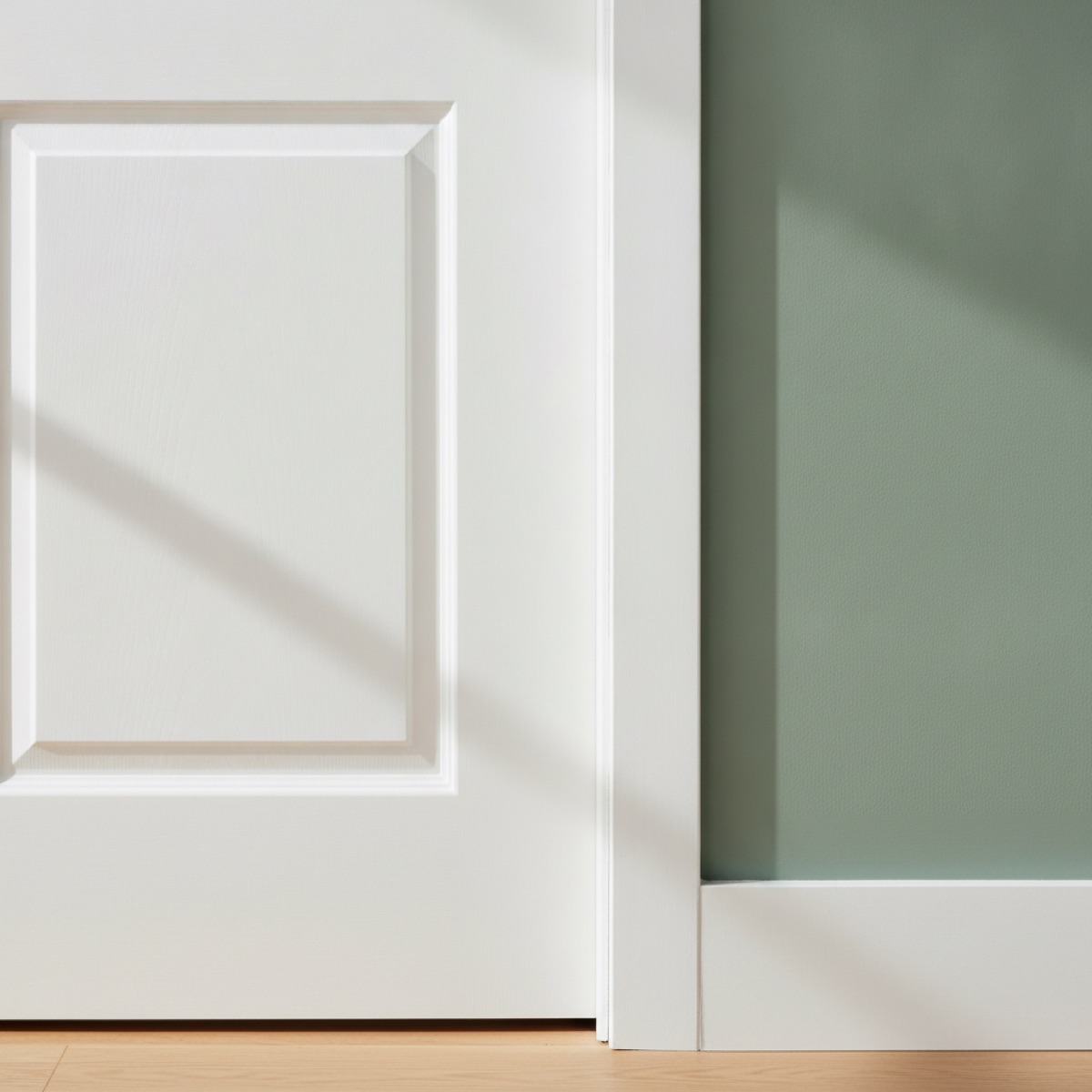
Hands and vacuums hit it daily. The hard film cleans, and shine reads crisp on narrow profiles.
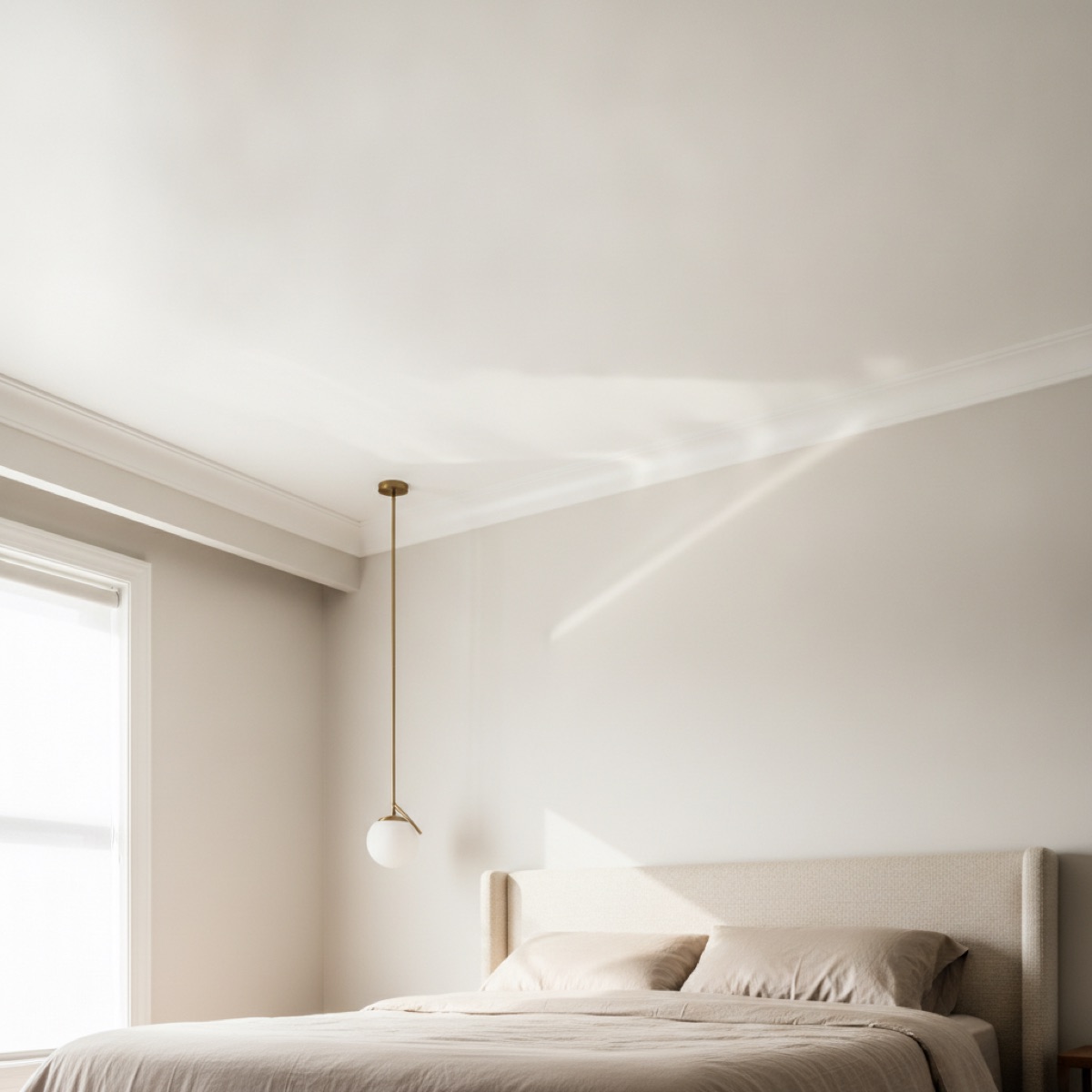
Fixtures rake light across it at a shallow angle — any sheen turns taped joints into shadows.
Room imagery: AI-rendered visualizations (Gemini), generated for this guide and labeled as such — the sheen recommendations and every number on this page are real.
Find your sheen in two taps
What are you painting?


Sheen is a durability decision, not a coverage decision. Use eggshell on bedroom and living-room walls, satin in bathrooms, kitchens, hallways and kids' rooms, semi-gloss on trim and doors, flat on ceilings. Coverage does not change with gloss: Sherwin-Williams ProMar 200 flat (PDS 101.81A) and semi-gloss (PDS 101.84) are both rated 350–400 sq ft per gallon per coat. Substrate sets the rate instead — plan 350 sq ft/gal per coat on smooth primed drywall, 325 on orange peel, 275 on knockdown, 280 on bare new drywall, 225 on popcorn ceilings, 250 on trim — then add 10% waste.
Rates and coverage figures updated August 2026. Compiled 2026 from sources last updated 2023–2026.What is the difference between flat, eggshell, satin and semi-gloss?
Sheen is the gloss level of the dried film, and it buys one thing at the cost of another. Higher gloss gives a harder, tighter surface you can wash. It also reflects more light, so it maps every ridge, patch and lap mark on the wall behind it. Flat does the reverse: it absorbs light and hides the wall, but scrubbing it burnishes a shiny spot you cannot undo.
Most interior lines carry five steps. Most houses use three of them — eggshell or flat on walls, satin where surfaces get touched, semi-gloss on trim. What does not change across those steps is how far a gallon goes.
| Sheen | Reflection | Durability and washability | What it does to wall flaws | Where it belongs | Spread rate |
|---|---|---|---|---|---|
| Flat / matte | None. Light dies in the film. | Lowest. Wipes, but scrubbing burnishes a permanent shiny spot. | Hides the most — roller stipple, patches, wavy or old drywall. | Ceilings, low-traffic adult bedrooms, rough or previously repaired walls. | 350–400 sq ft/gal per coat (label); plan 350 |
| Eggshell | Faint low luster at a raking angle. | Moderate. Takes a damp cloth and light cleaning without polishing up. | Hides most minor flaws; heavy patch work still reads in side light. | Bedrooms, living and dining rooms, most general wall area. | 350–400 sq ft/gal per coat (label); plan 350 |
| Satin | Soft, even sheen visible across the wall. | Good. Repeated washing without burnishing; handles moisture. | Shows roller marks and patches. Rewards good prep. | Bathrooms, kitchens, hallways, stairwells, kids' rooms, laundry. | 350–400 sq ft/gal per coat (label); plan 350 |
| Semi-gloss | Clear shine, obvious under any lamp. | High. Scrub-tolerant, sheds fingerprints and splashes. | Highlights everything. Unusable over an uneven wall. | Trim, doors, casing, cabinets, sometimes bathroom walls. | 350–400 sq ft/gal per coat on walls; 250 on trim |
| Gloss | Near-mirror. | Highest. The hardest, most cleanable film in the line. | Magnifies every defect, including ones you sanded. | Doors, railings, accent millwork. Rarely a whole wall. | 350–400 sq ft/gal per coat on walls; 250 on trim |
Does a flat gallon cover more wall than a semi-gloss gallon?
No. Sherwin-Williams publishes both numbers: ProMar 200 flat (PDS 101.81A) and ProMar 200 semi-gloss (PDS 101.84) are each rated 350–400 sq ft per gallon per coat. Same line, same rate, different gloss. Volume solids in the can and the real surface area of the substrate set the spread rate.
Substrate is where the variance lives. Smooth primed drywall takes 400 sq ft/gal at label rate; plan 350. Orange peel drops to 325, knockdown to 275, bare new drywall to 280, popcorn ceiling to 225, and trim to 250, because you are brushing narrow profiles instead of rolling flat area. Those rates sit in our paint coverage chart and behind the quick gallons estimator.
What sheen should you use in each room?
One pick per surface, with the reason it wins and the rate to plan gallons at.
| Surface or room | Sheen to use | Why | Plan at |
|---|---|---|---|
| Living and dining walls | Eggshell | Enough film to wipe a scuff, little enough shine to forgive old drywall. | 350 sq ft/gal per coat smooth; 325 orange peel |
| Bedrooms | Eggshell; flat if walls are wavy | Low traffic, so durability matters less than a wall that reads even. | 350 sq ft/gal per coat |
| Ceilings, smooth | Flat ceiling paint | Fixtures throw light across a ceiling at a near-zero angle. Any sheen turns taped joints into shadows. | 350 sq ft/gal per coat |
| Ceilings, popcorn | Flat only | Texture holds far more surface area, and washability is unachievable on it anyway. | 225 sq ft/gal per coat |
| Trim, doors, casing | Semi-gloss | Hands, shoes and vacuums hit it; the hard film cleans, and on a narrow profile shine reads as crisp. | 250 sq ft/gal per coat |
| Bathroom walls | Satin | Moisture and splash tolerance without the mirror effect semi-gloss gives across a big flat wall. | 350 sq ft/gal per coat |
| Kitchen walls | Satin | Grease and steam wipe off. The paintable area is small — cabinets and appliances take most of it — but cutting in around them is slow, which is why quotes for one kitchen run $150–$250 (HomeGuide, pricing the area) to $850–$1,350 (Improovy, pricing the cut-in labor). | 350 sq ft/gal per coat |
| Hallways and stairwells | Satin | The highest-contact walls in the house, usually with the worst raking light. Satin is the compromise. | 350 sq ft/gal per coat |
| Kids' rooms | Satin | Marker, handprints and repeated cleaning beat the flaw-hiding argument here. | 350 sq ft/gal per coat |
| Laundry | Satin | Humidity, lint, and knocks from machines and baskets. | 350 sq ft/gal per coat |
Higher sheen or fewer visible flaws — how do you choose?
Pick the sheen for the wall you actually have, not for the room type. Stand where the light comes from — a window at 4pm, or a lamp near the wall — and look down the surface at a shallow angle. If you can already see seams, old patches or the ghost of a repair, you have your answer: every step up in sheen makes that worse, and rolling technique does not fix it afterward.
The 60-second sheen decision
- Does the wall get touched or splashed? Hands, food, steam, kids, pets → satin. Otherwise eggshell.
- Does raking light show flaws now? Yes → drop one step (satin becomes eggshell, eggshell becomes flat), or budget patch and sand at $1–$3 per sq ft of wall.
- Is it a ceiling? Flat. No exceptions worth making.
- Is it wood or millwork? Semi-gloss, planned at 250 sq ft/gal per coat.
- Still torn between eggshell and satin? Choose satin only if you will genuinely wash the wall. Otherwise you are buying visible flaws for a benefit you never use.
Prep is where a sheen choice costs money. Painters budget about 4 hours per 1,000 sq ft of wall in good condition, 8 hours on fair walls and 16 on poor ones, billed at $25–$75 per hour (HomeGuide, September 2025 painter page). Higher sheen raises the standard the wall has to meet, so the same wall lands in a worse band. That swing is larger than the paint, which runs $20–$80 per gallon.
Why are ceilings flat and trim semi-gloss?
Both answers are about light angle. A ceiling is lit from below by fixtures sitting inches off its surface, so light rakes across it at almost zero degrees — the harshest angle for showing a taped joint. Flat kills that reflection. It is also why ceilings are almost never washed: you accept a paint you cannot scrub to get a ceiling that does not show every seam.
Trim is the opposite case. It is narrow, people put their hands on it, and its curves read shine as crisp rather than blotchy. Semi-gloss survives fingerprints, scuffs and cleaning. The trade is that trim must be sanded first — brush marks and dust nibs are obvious in semi-gloss and invisible in flat.
Budget both apart from walls: trim $1.00–$4.00 per linear foot of trim (add about 25% above 8 ft), a door painted both sides $75–$150 per door, ceilings $1.00–$2.00 per sq ft of ceiling. The painting bid calculator keeps those line items separate instead of blending them into one wall rate.
What sheen goes over a patched wall, and how do touch-ups behave later?
Patches are the sheen trap. A repair is smoother and more porous than the wall around it, so it dries at a different sheen out of the same can — flashing. In flat you may never see it; in satin or semi-gloss it shows as a dull halo the shape of the repair. The fix is not more topcoat: spot-prime the patch, then coat the wall corner to corner.
Touch-ups a year later follow the same rule. Flat touches up nearly invisibly. Eggshell touches up acceptably with the same roller nap. Satin and semi-gloss do not — a dab reads as a different sheen at every angle, and the clean repair is repainting to the nearest inside corner. Worth knowing before you pick satin for a hallway you expect to scuff.
If the walls need real repair first, price it separately: drywall repair $150–$325 per room, patch and sand $1–$3 per sq ft of wall. Replacing board is a different job — the drywall calculator covers sheets, mud and tape.
Does the sheen you pick change what the job costs?
Barely, on materials. Sheens within one line are priced within a few dollars of each other, and you buy the same number of gallons either way. Paint runs $20–$80 per gallon, premium lines above $100, and sundries add about 20% of the paint cost. Scope and prep move the number instead.
Interior repainting runs $1.00 low, $1.75 typical and $3.00 high per sq ft of paintable wall, two coats with materials — HomeGuide's widely cited $1–$3 band, whose core page is bylined August 2023, read together with Angi/HomeAdvisor. Treat those as two sources and not three: Angi owns HomeAdvisor, and NerdWallet republishes Angi's tables. Labor is 75–85% of the bid and 80% is typical, which checks out against Thumbtack's own published jobs: $4,420 labor on $5,392 total is 82.0%.
There is also a floor. Any single-room, closet or accent-wall result under $250 is not a real quote — contractors hold a $250–$500 job minimum however little wall is involved. An accent wall runs $80–$200 as an add-on to a larger job, not as a standalone visit.
For the full basis behind those ranges, including which aggregators are actually independent, see our interior painting cost per square foot methodology, or draw the room and get gallons plus supplies from the visual paint planner.
Frequently asked
Does flat paint cover more square feet per gallon than semi-gloss?
No — both are rated 350-400 sq ft per gallon per coat. Sherwin-Williams publishes ProMar 200 flat (PDS 101.81A) and semi-gloss (PDS 101.84) at the same rate: same line, same spread, different gloss. Volume solids in the can and the real surface area of the substrate set the number. Texture is the variable that matters: about 325 sq ft/gal on orange peel, 275 on knockdown, 280 on bare new drywall, 225 on a popcorn ceiling and 250 on trim, all per coat.
Eggshell vs satin — which should I use?
Both cover the same 350-400 sq ft per gallon per coat, so the choice costs nothing in paint: pick satin only if you will genuinely wash that wall, otherwise eggshell. Satin gives a harder, scrub-tolerant film, but it reflects enough light to show roller marks, patches and wavy drywall. Eggshell hides most minor flaws and still takes a damp cloth. The real cost is prep, which runs 4 hours per 1,000 sq ft of wall in good condition and 16 hours on poor walls, billed at $25-$75 per hour (HomeGuide, September 2025).
What sheen should I use for bathroom walls?
Satin, planned at 350 sq ft per gallon per coat on smooth primed drywall. It tolerates steam and splash and survives repeated cleaning, without the mirror effect semi-gloss produces across a large flat wall. Semi-gloss is defensible in a small windowless bath with sound drywall and a working fan. If the walls are visibly uneven, drop to eggshell and rely on the exhaust fan instead — no sheen fixes a ventilation problem.
What sheen should I use for trim and doors?
Semi-gloss, planned at 250 sq ft per gallon per coat, because you are brushing narrow profiles rather than rolling flat area. Trim takes hands, shoes and vacuum knocks, so it needs the hard, washable film, and its curves read shine as crisp rather than blotchy. Sand properly first — brush marks and dust nibs are fully visible in semi-gloss and invisible in flat. On pre-1978 homes, run a lead test at $200-$600 per test before sanding old trim.
What sheen for kitchen walls?
Satin, planned at 350 sq ft per gallon per coat, for grease and steam that need wiping off. The paintable area is small — cabinets, backsplash and appliances occupy most of the wall — which is why kitchen quotes disagree more than any other room, from $150-$250 (HomeGuide, pricing the remaining area) to $850-$1,350 (Improovy, pricing the labor of cutting in around cabinets). Those two measure different things and should not be averaged.
What is the best paint finish for bedroom walls?
Eggshell for most bedrooms, planned at 350 sq ft per gallon per coat on smooth primed drywall. Traffic is low, so durability matters less than a wall that reads even. Drop to flat if raking window light already shows seams, old patches or wavy drywall — flat hides them, and a bedroom wall rarely needs scrubbing. Reserve satin for kids' rooms, where marker and handprints outweigh the flaw-hiding argument.
What sheen should ceilings be?
Flat — plan 350 sq ft per gallon per coat on a smooth ceiling and 225 on popcorn. Ceiling fixtures throw light across the surface at a near-zero angle, the harshest condition for revealing taped joints, so any sheen turns seams into shadows. You give up washability, but ceilings are almost never washed. On homes built before 1986, test popcorn for asbestos at $250-$850 per test before disturbing it.
Sources and method
Figures on this page were compiled in August 2026 from the sources below, whose own publication dates run from 2023 to 2026. Where they disagree, the disagreement is stated rather than averaged away.
- Sherwin-Williams product data sheets: ProMar 200 interior latex flat (PDS 101.81A) and semi-gloss (PDS 101.84), both published at 350-400 sq ft per gallon per coat. Manufacturer data, current line.
- HomeGuide interior painting and painter cost pages — source of the widely cited $1-$3 per sq ft of paintable wall figure; the core interior page is bylined 28 August 2023 despite a 2026 title, while its September 2025 painter page raises billed hourly to $25-$75. Where the two conflict, the newer page is used.
- Angi / HomeAdvisor cost data, 2024-2025 — treated here as one source, not three: Angi owns HomeAdvisor and NerdWallet republishes Angi's tables.
- Improovy kitchen painting figures ($850-$1,350 per kitchen), quoted alongside HomeGuide's $150-$250 to show the two price different things. Not averaged.
- Homewyse painting cost data, 2025 — measured on gross wall area including door and window openings, a different denominator from the others. Used as an upper bound only, never as a central estimate.
- Fixr painting cost data, 2025 — 40-60% above every other source on a common basis, and excluded from every range on this page.
- Thumbtack published job figures, 2025, used to derive the labor share of a painting bid: $4,420 labor on a $5,392 total is 82.0%, and $19,891 on $24,242 is 82.1%.
- Compiled 2026 from sources last updated 2023-2026.
This is an estimate for planning, not a quote or a bid. Confirm any figure against local contractor pricing before you commit money to it.